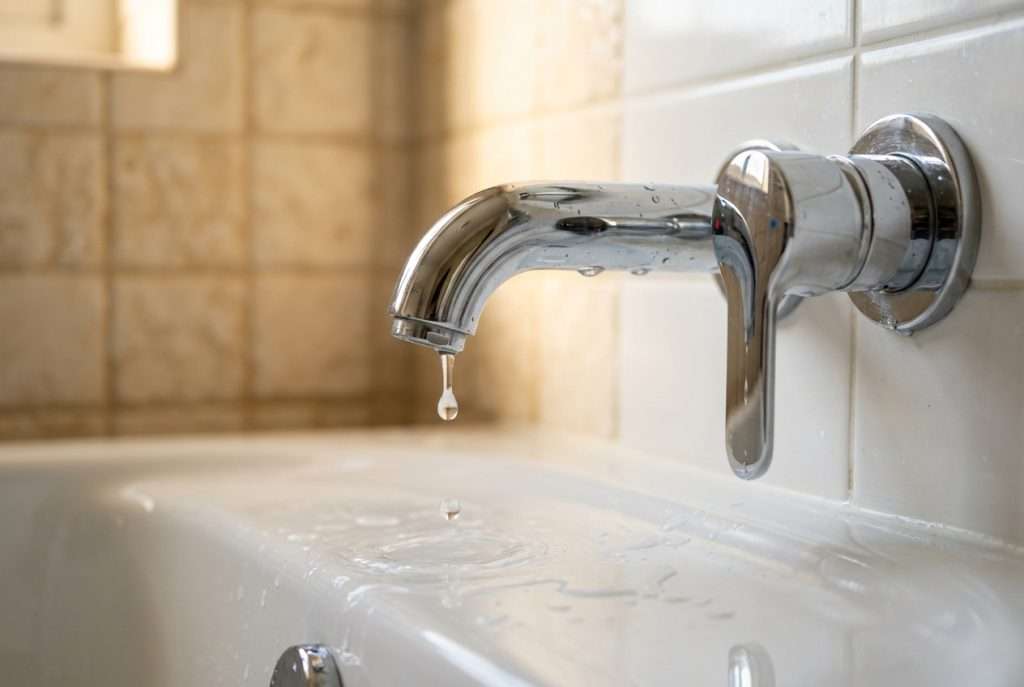
A dripping bathtub faucet is one of those problems that starts small and gets worse. That steady drip wastes water, drives up your bill, and usually means something inside the faucet is wearing out. The good news is that most bathtub faucet leaks have straightforward causes — and many of them are fixable without tearing open a wall.
Here’s what’s likely going on and what you can do about it.
Why Is Your Bathtub Faucet Leaking?
Most bathtub faucet leaks come down to a handful of worn or damaged parts inside the valve body. The specific culprit depends on whether you have a single-handle or two-handle setup, but the usual suspects include:
- Worn-out washers or O-rings. These rubber seals compress every time you turn the faucet on and off. Over time, they harden, crack, or flatten — and water starts slipping past.
- Corroded valve seat. The valve seat is the metal surface the washer presses against. If it’s pitted or rough from mineral buildup, even a new washer won’t seal properly.
- Faulty cartridge. Single-handle bathtub faucets use a cartridge to control water flow and temperature. When the cartridge wears out, the faucet drips even when it’s fully off.
- Worn stem packing. Two-handle faucets have stems that turn to open and close the water. The packing around those stems can dry out or deteriorate, letting water seep around the handle.
- Damaged diverter. If your tub spout drips from the bottom while the shower is running, the diverter — the mechanism that redirects water up to the showerhead — may be worn or stuck.
How to Fix a Leaking Single-Handle Bathtub Faucet
Single-handle faucets are common in newer homes. The repair usually involves replacing the cartridge:
- Turn off the water supply. Look for shut-off valves behind an access panel on the other side of the wall. If there’s no dedicated shut-off, turn off the main water supply to the house.
- Remove the handle. Pop off the decorative cap (if there is one), remove the screw underneath, and pull the handle off.
- Take off the trim plate. Unscrew the escutcheon plate to expose the valve body behind the wall.
- Pull the cartridge. You may need a cartridge puller tool, especially if it’s been in there a while. Note the orientation before you remove it.
- Inspect and replace. Bring the old cartridge to a hardware store to match it. Replace any O-rings while you’re at it.
- Reassemble and test. Put everything back in reverse order, turn the water on slowly, and check for leaks.
If the cartridge looks fine but the faucet still drips, the valve body itself may be damaged — and that’s a job for a plumber.
How to Fix a Dripping Two-Handle Bathtub Faucet
Two-handle faucets (one for hot, one for cold) are common in older homes. The repair process is a little different:
- Shut off the water to the bathtub or the whole house.
- Remove the handles. Unscrew the decorative caps, remove the handle screws, and pull the handles off.
- Unscrew the stems. Use a deep socket or stem wrench to unscrew and remove the stems from the valve body.
- Replace the seat washers. The rubber washer at the bottom of each stem is the most common failure point. Pry the old one off, take it to match at the hardware store, and install the new one.
- Check the valve seats. Shine a flashlight into the valve body and feel the seat with your finger. If it’s rough or pitted, use a seat grinder/dresser to smooth it — or replace the seat if it’s removable.
- Reassemble and test. Reinstall the stems, handles, and decorative caps. Turn the water back on and check.
If the stems themselves are worn or stripped, replacement stems are available for most faucet brands.
Bathtub Spout Leaking When the Water Is Off
If water drips from the tub spout after you’ve turned everything off, the problem is usually inside the faucet — not the spout itself. A worn cartridge, bad washer, or corroded valve seat lets water trickle through even in the “off” position.
However, if the spout leaks from the base where it meets the wall, that’s a different issue. The spout may be loose, the pipe threads may be corroded, or the spout’s slip-fit connection may have failed. In most cases you can unscrew the old spout, clean the pipe threads, wrap them with Teflon tape, and install a replacement.
If your tub has a diverter built into the spout (the pull-up knob on top), a worn diverter gate can also cause water to dribble from the spout while you’re showering. Replacing the entire spout is usually the easiest fix since the diverter isn’t separately serviceable on most models.
If you’re dealing with a leaking showerhead at the same time, the problem may be further back in the valve — worth checking both before you start buying parts.
When to Call a Plumber
Some bathtub faucet leaks are easy weekend fixes. Others aren’t. Here’s when it makes sense to bring in a professional:
- The leak is behind the wall. If you see water stains, soft drywall, or mold on the wall behind the tub, the valve body or supply connections may be leaking — not just the faucet. That requires opening the wall and potentially replacing the valve.
- The valves are old or corroded. Older homes with galvanized steel or heavily corroded copper plumbing can make a simple cartridge swap turn into a much bigger project. Forcing a corroded stem can break the valve body.
- You’ve tried the DIY fix and it’s still dripping. If you’ve replaced the washer, cartridge, or O-rings and the leak persists, the valve seat or body may need professional attention.
- You can’t find a shut-off. Without a way to safely shut off water to the tub, don’t risk it — a plumber can locate and install proper shut-offs.
- There are signs of water damage. Staining on the ceiling below, warped flooring, or a musty smell all suggest the leak has been going on longer than you think. A plumber can find hidden water leaks and assess the full extent.
Don’t underestimate the real cost of ignoring a leaky faucet — even a slow drip adds up fast.
How Much Water Does a Leaking Faucet Waste?
More than you’d think. According to the EPA, a faucet that drips at just one drip per second wastes roughly 3,000 gallons of water per year. That’s enough to fill a backyard swimming pool.
For Southern California homeowners paying tiered water rates, those extra gallons can push you into a higher billing tier — meaning you’re not just paying for the wasted water, you’re paying a premium rate for all your usage.
Fixing the drip usually costs a fraction of what you’d spend on wasted water over a year. For some quick faucet fix tips, a new washer or cartridge and a few minutes of work can stop the problem entirely.
Stop the Drip
A leaking bathtub faucet is almost always a sign that an internal part has worn out. In most cases, identifying the faucet type (single-handle vs. two-handle), shutting off the water, and replacing the worn component will solve the problem.
If the leak is more than a simple drip — or if you’re seeing signs of water damage behind the wall — it’s worth getting a professional involved before a small problem turns into a big one.
If you need help with a leaking bathtub faucet, call Western Rooter & Plumbing at (626) 448-6455 or schedule service online through our website.