
Replacing a kitchen faucet is one of the more approachable plumbing jobs for a homeowner. If your sink has a single-hole mount and working shutoff valves underneath, most people can swap a faucet in 30 to 60 minutes with basic tools. But corroded connections, missing shutoffs, or non-standard setups turn a simple job into a frustrating one fast. That’s when calling a plumber saves you time, water damage, or both.
What You Need Before You Start
Before you buy a faucet or grab a wrench, check three things under the sink:
Hole count and spacing. Look at the top of the sink deck. Kitchen faucets come in single-hole, three-hole, and four-hole configurations. Your new faucet needs to match the existing holes or come with a deck plate that covers the extras. Measure the center-to-center distance between holes — standard spacing is 8 inches, but it varies.
Shutoff valves. You should see two small valves on the supply lines under the sink (hot and cold). Turn each one clockwise to confirm they actually shut off. If there are no shutoff valves, or they’re frozen and won’t turn, stop here. You’ll need a plumber to install new ones before you can safely swap the faucet.
Supply line condition. Braided stainless steel lines are standard on modern faucets. If you see rigid copper or chromed supply tubes, plan to replace them with braided flex lines while you’re at it. They’re cheap ($5-$10 each) and far easier to work with.
Tools you’ll need: adjustable wrench, basin wrench (the long-handled one that reaches behind the sink), plumber’s tape, bucket, flashlight, and towels. A headlamp makes the cramped under-sink work much easier.
How to Replace a Kitchen Faucet Step by Step
- Shut off both supply valves under the sink. Turn on the faucet to drain residual pressure and water from the lines.
- Disconnect the supply lines from the old faucet using an adjustable wrench. Have a bucket underneath — some water will drain out.
- Remove the mounting nuts holding the old faucet to the sink deck. This is where the basin wrench earns its place in your toolbox. The nuts are recessed behind the sink bowl, and a standard wrench usually can’t reach them.
- Lift out the old faucet. Clean the sink deck thoroughly — old plumber’s putty, mineral deposits, and grime build up over years and need to come off before the new faucet can seal properly.
- Install the new faucet following the manufacturer’s instructions. Most modern kitchen faucets use a rubber gasket on the underside instead of plumber’s putty. Hand-tighten the mounting hardware, then snug it with the basin wrench. Don’t overtighten. The gasket does the sealing, and cranking down too hard can crack the sink deck.
- Connect the supply lines. Thread them onto the faucet inlets hand-tight, then give a quarter turn with the wrench. Wrap the threads with plumber’s tape if the instructions call for it (some faucets use rubber seals instead).
- Turn on the supply valves slowly. Check every connection for drips. Run both hot and cold water for a minute, then check under the sink again.
How Much Does Kitchen Faucet Replacement Cost?
DIY cost: The faucet itself runs $80 to $400 or more depending on brand and features (pull-down sprayer, touchless, pot filler). Add $10-$25 for supply lines and tape if you need them. A basin wrench costs $15-$25 if you don’t own one.
Plumber cost: In Southern California, expect $150 to $350 for labor on a straightforward swap — shutoff valves already present, standard configuration, no complications. The faucet is usually an additional cost unless the plumber supplies it.
What raises the price: Corroded or seized shutoff valves that need replacing ($75-$150 extra), non-standard mounting that requires deck modification, or connecting to a side sprayer, soap dispenser, or filtration system alongside the faucet.
Should You Replace It Yourself or Hire a Plumber?
DIY makes sense when:
– Your shutoff valves work and you’ve confirmed they stop the water
– The sink has a standard single-hole or three-hole configuration
– You can physically access the underside of the sink (some undermount sinks in deep countertops make this difficult)
– You’re comfortable working with water connections
Call a plumber when:
– There are no shutoff valves under the sink, or the existing ones don’t close fully
– The supply lines are corroded rigid copper or the fittings are seized
– You’re moving from a different faucet configuration (e.g., three-hole to single-hole, which requires covering or drilling holes)
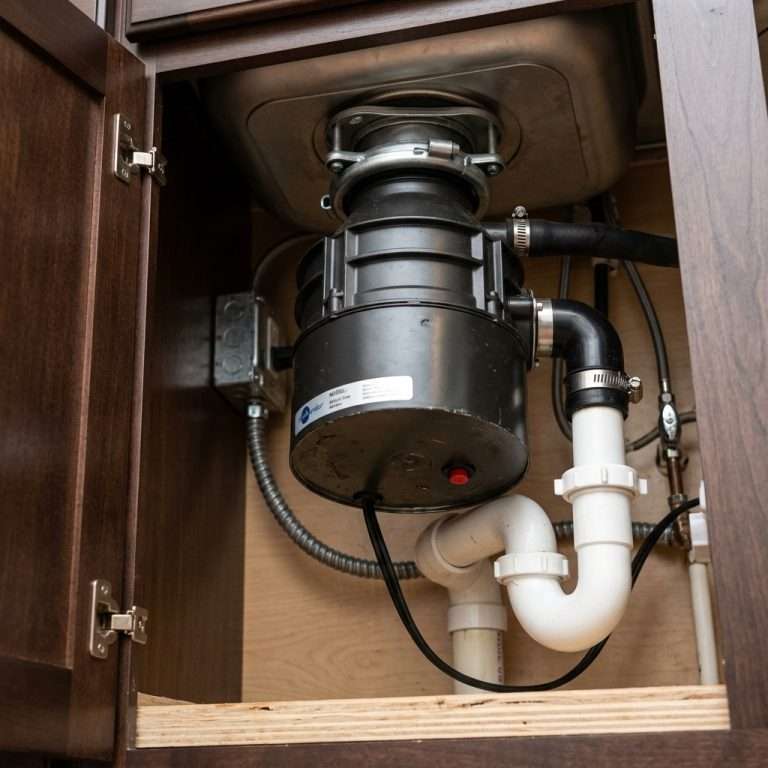
– The job involves connecting a dishwasher line, garbage disposal, or water filtration system at the same time
– You’ve already tried and something is stuck, stripped, or leaking
A plumber who handles faucet and sink services regularly can usually finish a replacement in under an hour, including testing.
Common Mistakes That Cause Leaks After Installation
Overtightening connections. Brass fittings and plastic faucet inlets crack under too much torque. Snug plus a quarter turn is enough for most connections.
Skipping the gasket or putty. If your faucet doesn’t include a rubber gasket for the deck seal, use a thin rope of plumber’s putty around the base before setting it. Without a seal, water splashed on the counter seeps down through the mounting hole.
Mismatched supply line sizes. Faucet inlets are usually 3/8-inch compression fittings, but shutoff valves can be 3/8-inch or 1/2-inch. Check both ends before buying supply lines. Most hardware stores carry lines with 3/8-inch on one end and 1/2-inch on the other.
Not testing long enough. A connection that looks dry when you first turn on the water can develop a slow drip over the next hour. Check under the sink again after 30 minutes and once more the next day. Run the sprayer — pull-down sprayer hose connections leak often.
How to Know It’s Time for a New Kitchen Faucet
At some point, repairs stop making sense and a new faucet is the better investment.
- Persistent dripping after you’ve already replaced the cartridge or valve seats. If new parts don’t stop the leak, the faucet body itself may be worn or corroded internally.
- Visible rust or mineral damage at the base, spout, or handles. Once corrosion eats through the finish, it’s working on the metal underneath.
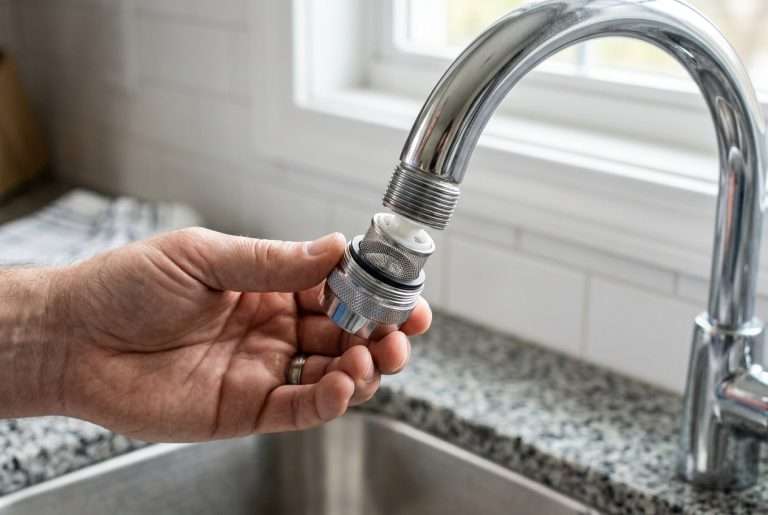
- Low flow that cleaning the aerator doesn’t fix. Internal corrosion or mineral buildup can restrict flow paths that you can’t reach. If cleaning or replacing the aerator doesn’t help, and you’ve ruled out low water pressure in your kitchen from the supply side, the faucet is likely the bottleneck.
- Loose handles or spout that tightening doesn’t solve. Worn internal fittings mean the faucet is at end of life.
- Age. Most kitchen faucets last 15 to 20 years. Hard water areas like much of Southern California shorten that — mineral buildup accelerates wear on cartridges and valve seats.
Ignoring a faucet that’s steadily leaking costs more in wasted water than replacing it early.
If you need help with a kitchen faucet replacement, or you’ve started the job and hit a problem, call Western Rooter & Plumbing at (626) 448-6455 or schedule service online through our website.