A bathroom sink faucet leak usually comes down to a worn-out internal part — a rubber washer, O-ring, or cartridge that no longer seals properly. The fix depends on where the water is escaping and what type of faucet you have. Most spout drips and handle leaks are straightforward DIY repairs that take 20–45 minutes with basic tools.
Where Is the Leak Coming From?
Before you take anything apart, figure out which of these four situations matches yours:
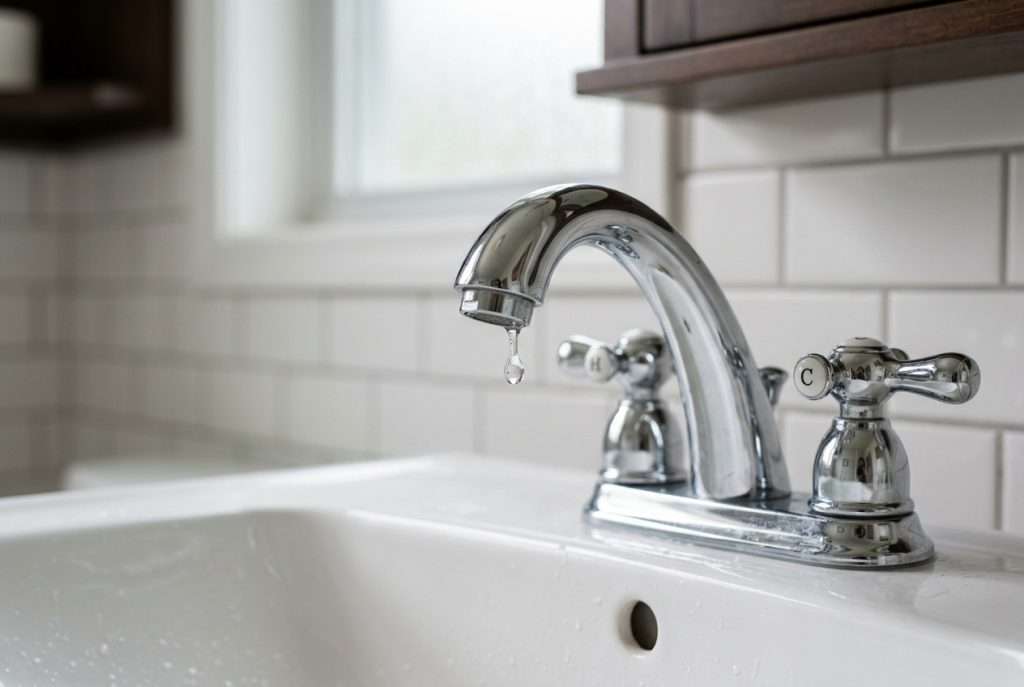
Dripping from the spout. The faucet drips into the sink bowl when the handles are off. This is the most common bathroom faucet leak. The internal seal or cartridge is worn.
Leaking around the handle. Water seeps out around the base of one or both handles when you turn the faucet on. Usually an O-ring or packing nut issue.
Leaking at the base of the spout. Water pools where the spout meets the sink or countertop, visible when the faucet is running. The O-rings under the spout body have failed.
Dripping under the sink (inside the cabinet). Water collects in the cabinet below. This is often a supply line connection, not the faucet itself. That’s a different repair path.
Knowing the leak location narrows the fix to one or two parts in most cases.
What Type of Faucet Do You Have?
Bathroom sink faucets fall into four main types. You can usually identify yours without removing anything:
Compression faucet. Two separate handles that you tighten to shut off. The handles feel like they “screw down” as you close them. Common in older homes. These use rubber seat washers that wear out with use.
Cartridge faucet. Single-handle or two-handle, but the handles lift or turn smoothly with no screw-down feeling. A self-contained cartridge controls flow. Cartridges wear internally and can crack.
Ball faucet. Single handle that moves in any direction (up, down, left, right) on a rounded cap. A steel or plastic ball with spring-loaded rubber seats controls temperature and flow. Common in kitchens, less common in bathrooms.
Ceramic disc faucet. Single handle, usually with a wider cylindrical body. Two ceramic discs inside rotate against each other. These last the longest and rarely leak, but the disc assembly can crack or collect mineral deposits. San Gabriel Valley hard water speeds up that buildup.
If you’re not sure, look for a brand name on the faucet and search the model number for a parts diagram. Or pull the handle off — the internal mechanism will tell you.
How to Fix a Dripping Faucet Spout
A spout drip means the seal between the water supply and the spout opening has failed. The repair depends on your faucet type.
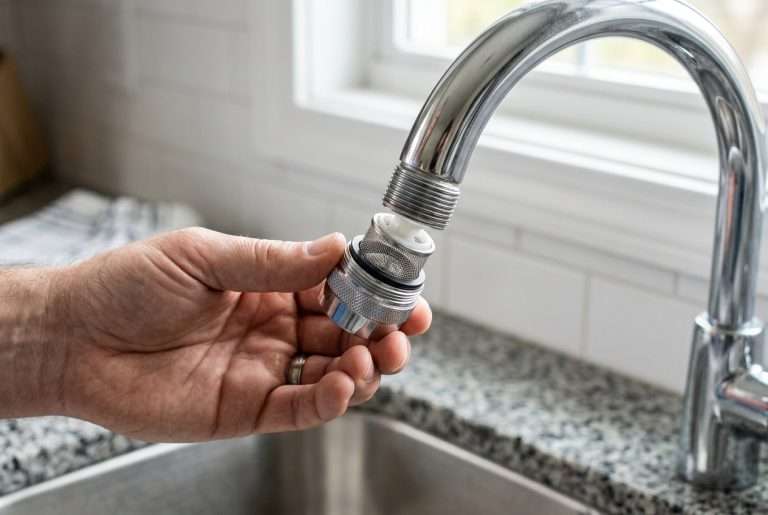
Compression faucet: Turn off the water supply under the sink. Remove the handle (pry off the decorative cap, unscrew the handle screw). Use a wrench to unscrew the packing nut, then pull out the stem. At the bottom of the stem you’ll find a rubber seat washer held by a brass screw. Replace the washer with an exact-size match. Bring the old one to the hardware store. While you’re in there, inspect the valve seat (the brass ring the washer presses against). If it’s pitted or rough, the new washer won’t seal. A seat wrench or seat grinder can resurface it, or you can replace the seat if it’s removable.
Cartridge faucet: Remove the handle, pull or unscrew the retaining clip or nut, and slide the cartridge out. Replace the entire cartridge — they’re inexpensive and available by brand/model. Trying to repair the cartridge internals isn’t worth the time.
Ball faucet: Remove the handle and unscrew the cap. Lift out the ball. Replace the rubber seats and springs in the body (they come as a kit). If the ball itself is scratched or corroded, replace it too.
Ceramic disc faucet: Remove the handle and the disc cylinder (usually held by two or three screws). Inspect the discs for cracks. Clean mineral deposits off the sealing surfaces with white vinegar. Replace the cylinder assembly if cracked. Handle these carefully. Ceramic discs can crack if you overtighten them during reassembly.
How to Fix a Faucet Leaking from the Handle or Stem
Water escaping around the handle base usually means the O-ring or packing around the stem has worn out.
For compression and cartridge faucets: remove the handle and tighten the packing nut slightly (1/8 turn) with a wrench. If that doesn’t stop it, remove the packing nut and replace the O-ring on the stem. Coat the new O-ring lightly with plumber’s grease before reinstalling.
For single-handle faucets, the cartridge O-rings may be worn. Pull the cartridge, replace the O-rings (or the whole cartridge, which is often easier and more reliable).
How to Fix a Faucet Leaking at the Base
A puddle that appears around the spout base only when the faucet is running points to failed O-rings under the spout body.
For most faucets: turn off the water, remove the handle, then lift or twist the spout body upward to slide it off. You’ll see one or two O-rings on the faucet body underneath. Replace them. Again, a thin coat of plumber’s grease helps the new O-rings seat and the spout reassemble smoothly.
On ball-type faucets, the adjustable ring under the cap can also work loose. Tighten it with the spanner wrench included in most ball faucet repair kits.
What If the Leak Is Under the Sink?
Water inside the cabinet doesn’t always mean the faucet is the problem. Check these first:
Supply line connections. The braided or chrome supply lines that connect the faucet to the shut-off valves can loosen over time. Hand-tighten, then snug with a wrench — don’t overtighten (you’ll crack the fitting).
Shut-off valve. The valve handle or packing can drip. Tighten the packing nut or replace the valve.
Drain connections. If the water appears only when the sink is draining (not when the faucet is running with the drain closed), the leak is in the P-trap, drain tailpiece, or pop-up assembly — not the faucet at all.
If you can’t pinpoint the source, dry everything off, lay down paper towels, and run the faucet for a few minutes. Watch where the first wet spot appears. For leaks hidden behind walls, you may need to track down a hidden water leak with a more systematic approach.
What Happens If You Ignore a Leaking Faucet?
A faucet dripping once per second wastes about 3,000 gallons per year (EPA estimate). Beyond the water bill, a persistent leak causes:
- Mineral staining and buildup on the sink, especially with hard water
- Mold growth in the cabinet if water drips below the sink
- Water damage to the vanity, subfloor, or drywall behind the sink if a base or under-cabinet leak goes unchecked
A slow drip from the spout is annoying but low-urgency. A leak under the sink that’s reaching the floor or cabinet bottom is worth fixing the same week. You can read more about the real cost of a leaky faucet for a deeper look at what long-term drips do to a home.
When Should You Call a Plumber?
Some faucet leaks are simple handle-and-wrench jobs. Others aren’t worth the frustration:
- You can’t identify the faucet type or find replacement parts. Older or off-brand faucets sometimes use proprietary cartridges that aren’t stocked locally.
- The valve seat is damaged. A corroded or cracked valve seat requires resurfacing or replacement — that takes a specialty tool and some experience.
- The leak is behind the wall. If water is coming from inside the wall rather than the faucet body, the supply line or connection behind the backsplash may be involved.
- You’ve replaced parts and it still leaks. A second failure usually means the faucet body itself is corroded or cracked. Replacement makes more sense than repeated repairs on a faucet past its useful life.
- The shut-off valves under the sink won’t close fully. If you can’t turn off the water to work safely, that’s a plumber call — the valves need replacement before you can address the faucet.
If the bathtub faucet is leaking too, or you’ve noticed a leaking showerhead, the problem might be wider than one fixture — aging supply lines or high water pressure can cause multiple leaks throughout a house.
If you need help with a leaky bathroom faucet, call Western Rooter & Plumbing at (626) 448-6455 or schedule service online through our website.