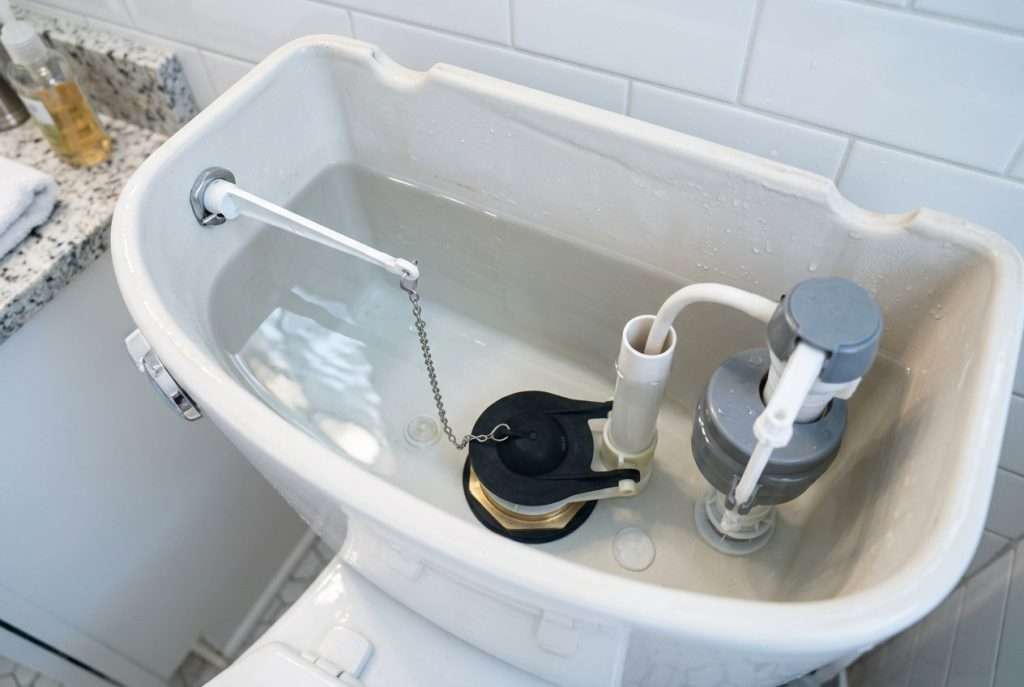
If your toilet runs on its own, makes a faint hissing sound, or occasionally “ghost flushes” in the middle of the night, the rubber flapper inside the tank is almost always the problem. A toilet flapper replacement takes about 10 minutes, no tools beyond your hands, and under $10 in parts.
Below: how to figure out if the flapper is the issue, pick the right replacement, and do the swap.
What Does a Toilet Flapper Do?
The flapper is a rubber or silicone disc that sits over the flush valve opening at the bottom of your tank. When you push the flush handle, a chain lifts the flapper, water rushes from the tank into the bowl, and the flapper drops back down to seal the opening so the tank can refill.
When the flapper warps, hardens, or gets coated in mineral deposits, it can’t seal properly. Water leaks past it into the bowl, the fill valve keeps running to compensate, and your water bill goes up.
Signs Your Toilet Flapper Needs Replacing
The toilet runs intermittently. You hear water cycling on for a few seconds every 15-30 minutes, even though nobody flushed. That’s the fill valve topping off water that leaked past the flapper.
Ghost flushing. The toilet seems to flush on its own. Same cause. Enough water leaks into the bowl to trigger the fill cycle.
You can hear water trickling. Put your ear near the tank. A faint, steady trickle means water is getting past the seal.
The dye test confirms it. Drop a few drops of food coloring into the tank (don’t flush). Wait 15-20 minutes. If colored water appears in the bowl, the flapper isn’t sealing.
Visible damage. Lift the tank lid and touch the flapper. If it feels stiff, warped, slimy, or crumbles at the edges, it’s done. Mineral buildup (white or green crust) is common in hard-water areas like much of the San Gabriel Valley and Inland Empire, where municipal water runs 15-25 grains per gallon.
Higher water bill with no obvious cause. A leaking flapper can waste 200+ gallons per day. If your bill jumped and nothing else changed, check the flapper first.
What Types of Toilet Flappers Are There?
Most residential toilets use one of two flapper styles:
Standard rubber/silicone flapper. A hinged disc that hooks onto two ears on the overflow tube. This covers probably 90% of home toilets. They come in two sizes: 2-inch and 3-inch.
Adjustable flapper. Has a dial or float that controls how long the flapper stays open. Used in some water-saving toilets to control flush volume.
There are also older seat-disc flappers (a flat disc that drops into a seat) found in toilets from the 1960s-80s. If you have one, a plumber can help match a modern replacement or upgrade the flush valve.
How to Find the Right Size
Most toilets made before roughly 2005 use a 2-inch flapper. Many toilets made after 2005 use a 3-inch flapper with a visibly wider drain opening at the bottom of the tank.
The simplest way to check: look at the drain opening in your tank. If it’s about the size of a baseball, that’s 2-inch. If it’s closer to a softball or grapefruit, that’s 3-inch.
You can also check the toilet model number (stamped inside the tank or under the lid) and look it up. “Universal” flappers work for most standard toilets, but some brands use proprietary designs. If the universal doesn’t seal after installation, you may need a brand-specific one.
How to Replace a Toilet Flapper
This takes about 10 minutes. You don’t need any tools.
- Shut off the water supply. Turn the valve behind the toilet clockwise until it stops. It’s usually a small oval handle near the floor.
- Flush the toilet to empty most of the tank water.
- Unhook the old flapper. Disconnect the chain from the flush lever. Then slide or unclip the flapper ears from the overflow tube pegs.
- Take the old flapper with you to the hardware store if you aren’t sure of the size. This is the easiest way to get a match.
- Hook the new flapper on. Slide the ears over the overflow tube pegs (or clip them into the hinge points). Attach the chain to the flush lever.
- Adjust the chain. There should be about half an inch of slack when the flapper is closed. Too much slack and the flapper won’t lift fully. Too little and it won’t seal.
- Turn the water back on and let the tank fill.
- Test it. Flush a couple of times. Watch the flapper drop and seal. Listen for any running or trickling after the tank fills. Run the dye test again if you want to confirm the seal.
Toilet Still Running After Replacing the Flapper?
If you swapped the flapper and the toilet still runs, check these:
Chain length. If the chain is too short, it holds the flapper slightly open. If it’s too long, it can get trapped under the flapper. Adjust to about half an inch of slack.
Flush valve seat damage. Run your finger around the rim where the flapper sits. If you feel grooves, pitting, or mineral buildup, the flapper can’t seal against a rough surface. You can try cleaning the seat with a Scotch-Brite pad and vinegar. Deep grooves mean the flush valve needs replacing, which is a bigger job.
Fill valve problem. If the water level in the tank is too high (above the overflow tube), the fill valve is the problem, not the flapper. Check out other reasons your toilet keeps running for a full breakdown.
Wrong flapper size. A 2-inch flapper on a 3-inch opening (or vice versa) won’t seal no matter what you do.
When to Call a Plumber
A flapper swap is straightforward, but some situations go beyond a simple replacement:
- The flush valve seat is cracked or heavily corroded. Replacing the entire flush valve assembly means pulling the tank off the bowl. Doable as a DIY project, but most homeowners prefer to call for toilet repair.
- The flapper keeps failing every few months. Repeated early failures can mean your water chemistry is eating the rubber faster than normal (high chlorine levels do this), or the flush valve itself is the wrong fit. A plumber can evaluate whether a different valve or flapper material will hold up.
- You notice leaking at the base of the toilet. Base leaks point to a wax ring or toilet flange issue, not the flapper.
- The toilet has other problems too. If it’s running AND rocking, or running AND you hear gurgling from drains, there may be a bigger plumbing issue underneath. Those are worth a professional diagnosis.
Our guide to common toilet problems covers other issues beyond the flapper.
How Long Do Toilet Flappers Last?
A standard rubber flapper lasts about 4-5 years under normal use. Silicone flappers can go longer, sometimes 7-10 years.
Hard water speeds up degradation. In areas like Pasadena, Arcadia, Glendora, and most of the San Gabriel Valley, mineral-heavy water deposits calcium on the flapper and the valve seat, which prevents a clean seal. Homes on well water or with high chlorine levels from municipal treatment see the same thing.
If you’re replacing flappers every year or two, consider a silicone flapper (they resist chlorine and mineral damage better) or ask a plumber whether a different flush valve would help.
If you need help with a running toilet or any toilet repair, call Western Rooter & Plumbing at (626) 448-6455 or schedule service online through our website.