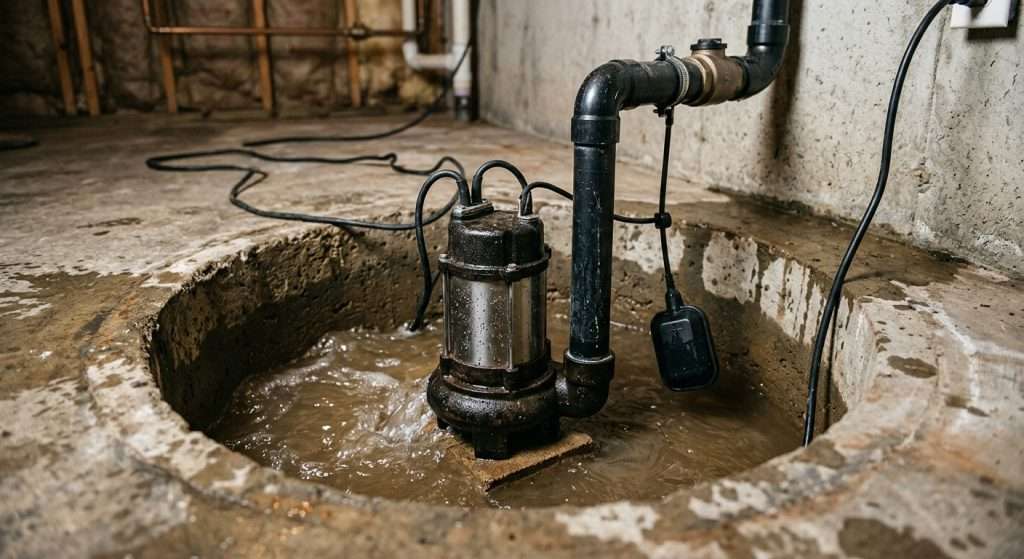
A sump pump that won’t shut off usually has a stuck float switch, a failed check valve, or is fighting a water source it can’t keep up with. The fix depends on which one, and most homeowners can rule out the easy causes in about 10 minutes before deciding whether to call a plumber.
How Does a Normal Sump Pump Cycle Work?
Water enters the sump pit through drain tiles or foundation weep holes. As the pit fills, a float switch rises and triggers the pump. The pump pushes water up through a discharge pipe and out away from the house. Once the water level drops, the float falls and the pump shuts off.
A healthy pump might cycle a few times during and after heavy rain. Outside of storms, it should be mostly quiet. If yours runs every few minutes, or never stops at all, something in that cycle is broken.
What Causes a Sump Pump to Keep Running?
Stuck or Tangled Float Switch
This is the most common cause. The float switch is a buoyant piece that rises with the water and tells the pump when to turn on and off. If it gets wedged against the pit wall, caught on the discharge pipe, or tangled in its own cord, it stays in the “on” position and the pump never gets the signal to stop.
What to do: Unplug the pump, reach into the pit, and check that the float moves freely up and down. Reposition it away from walls and pipes. Plug the pump back in and watch for a normal cycle. If the float itself is cracked or waterlogged, it needs to be replaced.
Failed or Missing Check Valve
The check valve is a one-way valve on the discharge pipe that prevents pumped water from flowing back into the pit. Without a working check valve, the pump pushes water up, the water falls right back down, the float rises again, and the pump kicks on. It’s an endless loop.
What to do: Look for the check valve on the discharge pipe above the pump (it usually has an arrow showing flow direction). If there isn’t one, that’s the problem. If there is one, listen for water rushing back into the pit after the pump shuts off. A gurgling or trickling sound means the valve is failing and needs replacement.
Undersized Pump
If the pump’s capacity (measured in gallons per hour) is too low for the amount of water entering the pit, it will run continuously because it can never actually get ahead of the inflow. (This is the opposite problem from a sump pump that won’t turn on — too little power rather than no power.) This is common when a homeowner replaces a pump with a cheaper, lower-capacity model or when site conditions change (new construction nearby that redirects groundwater, for example).
What to do: Check the pump’s rated capacity on the label or manual. For most residential applications, a 1/3 HP pump handles normal conditions. Homes with high water tables or large drainage areas may need 1/2 HP or more. If your pump runs nonstop even in dry weather, it may be undersized for your pit.
High Water Table or Underground Spring
Some properties sit on naturally high water tables, especially in low-lying areas or near hillsides where groundwater seeps downhill. The sump pump is doing its job (there really is that much water), but it may not be designed for continuous-duty operation.
What to do: If the pump runs frequently even during dry periods and the pit always has water in it, you’re likely dealing with a high water table. A plumber can evaluate whether a larger pump, a backup system, or a better-sized pit and pump setup would solve the problem.
Faulty Float Switch (Electrical)
Even if the float moves freely, the switch mechanism inside can fail. A float switch that’s electrically stuck in the “on” position will keep the pump running regardless of water level. You’ll notice the pump running even when the pit is dry or nearly empty.
What to do: Unplug the pump. If the pit is empty and the pump was still running, the float switch has likely failed. Replacing the float switch is a straightforward repair. On most models it’s a separate component that connects to the pump with a plug.
Pit or Liner Too Small
If the sump pit is too narrow or shallow, the pump cycles too frequently because the pit fills up fast. The pump turns on, empties the small volume quickly, then the pit refills almost immediately. This rapid cycling looks and sounds like continuous running.
What to do: Measure the pit. Most residential sump pits should be at least 18 inches in diameter and 24 inches deep. If yours is significantly smaller, the pit itself may need to be replaced or enlarged, which is a job for a professional.
What Happens If You Let a Sump Pump Run Nonstop?
A sump pump that runs without stopping will burn out faster. Most residential pumps are rated for intermittent duty, not 24/7 operation. Continuous running overheats the motor, wears the impeller, and can trip the thermal overload (if the pump has one), leaving you with no pump at all when you need it most.
Beyond the pump itself, a constantly cycling system increases your electricity bill and masks the real problem. A failed check valve or stuck float won’t fix itself, and an undersized pump running at full capacity is one power outage away from a plumbing emergency.
When Should You Call a Plumber?
If you’ve checked the float switch and it moves freely, verified the check valve is working, and the pump still won’t stop — or if the pit always has water even during dry weather — it’s time to call a professional. A plumber can assess your water table, check the drainage system feeding the pit, and recommend the right pump size and pit configuration.
You should also call a plumber if:
- The pump is more than 7–10 years old and cycling constantly (regular sump pump maintenance helps extend that lifespan)
- You hear the check valve leaking but aren’t comfortable replacing it
- The pit needs to be enlarged or replaced
- You want to add a battery backup system for storm protection
If you need help with a sump pump that won’t stop running, call Western Rooter & Plumbing at (626) 448-6455 or schedule service online through our website.