Your water heater’s expected lifespan of 10-15 years can drop substantially due to sediment buildup. Most people don’t realize that this hidden accumulation poses one of the biggest threats to their water heater’s efficiency and longevity. The problem often goes unnoticed by homeowners and property managers until serious damage occurs.
Sediment accumulation at the bottom of water heater tanks creates an insulating barrier that traps heat. Your system works harder than needed as a result. Many ask: can sediment in hot water tanks be dangerous? The answer is yes. The buildup not only degrades performance but also triggers corrosion and tank damage. These issues often lead to leaks or complete system failure. Your water heater faces constant strain and might fail much earlier than expected.
This piece explores sediment formation in hot water systems. You’ll learn the warning signs and practical prevention steps to protect your water heater from this silent threat.
How Sediment Forms and Why It’s a Hidden Threat
Sediment in your water heater builds up naturally as minerals like calcium and magnesium separate when water heats up. These minerals drift down and settle at the tank’s bottom, creating thicker layers over time. Your water heater collects sediment much faster if you live in a hard water area.
Sediment becomes dangerous because you can’t see it happening. Most plumbing problems give you clear signs – pipes make noise or start leaking. But sediment does its damage quietly, building up inside your tank where only a professional can spot the problem.
These mineral deposits create a barrier between your heating element and water. Your system needs to run longer cycles to heat the water, which wastes energy and gives you less hot water. The trapped heat makes things worse by overheating the tank’s bottom, which weakens the steel and leads to early corrosion.
Property managers face this risk with every water heater in their buildings. You need regular maintenance, not optional checkups – especially in Los Angeles and San Bernardino Counties where water hardness changes from one neighborhood to the next.
This hidden buildup acts like a time bomb in your water heating system. It shortens your heater’s life and drives up your utility bills fast.
Contact Western Rooter today to get your free estimate on preventative water heater maintenance!
The Chain Reaction: How Sediment Cuts Water Heater Life in Half
Sediment accumulation sets off a destructive chain reaction in your water heater that can cut its lifespan in half. A layer of minerals builds up between the heating element and water, which forces your system to use 6-8% more energy in just two years. This waste of energy does more than increase your bills—it damages your unit at a fundamental level.
The thickening sediment creates “hot spots” on the tank bottom and weakens the metal. Your heating element has to work harder, which makes the tank expand and contract again and again. This repeated stress speeds up metal fatigue and eventually causes cracks or leaks.
The sediment also traps moisture against the tank’s metal surface, which creates perfect conditions for corrosion. Rust quickly attacks the exposed steel once the protective interior lining breaks down. The corrosion speeds up after your tank’s anode rod—a sacrificial component that attracts corrosive elements—runs out.
Overheating, pressure changes, and corrosion work together to create serious problems:
- Excessive cycling that burns out components early
- Fast-moving corrosion that weakens the tank
- Bacteria growing in sediment that breaks down tank materials
A water heater that should last 10-15 years might fail after only 5-7 years.
Call Western Rooter today to get a free estimate on professional tank flushing and stop your unit from failing early!
Warning Signs and Prevention for Homeowners and Property Managers
Your water heater might need thousands in replacement costs if you miss the warning signs of sediment buildup. The first alert often comes as unusual noises – your tank might make popping, rumbling, or hissing sounds. These noises happen when steam bubbles form under layers of sediment and burst as the water heats.
Several other warning signs should grab your attention:
- Water stays lukewarm even with high temperature settings
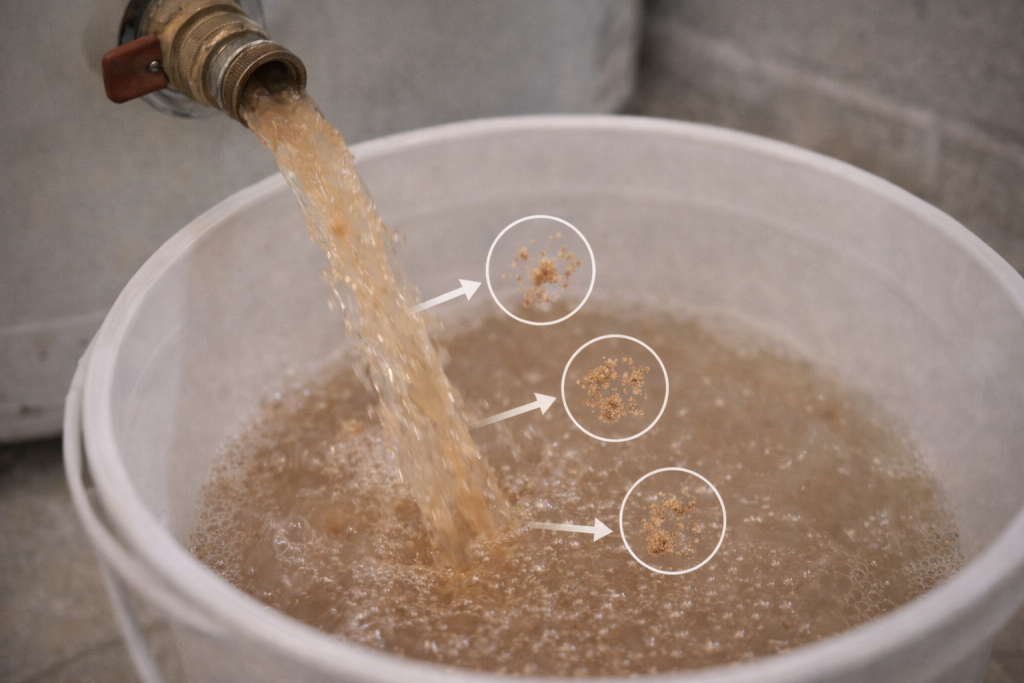
- Hot water appears cloudy or rust-colored with a metallic smell
- Hot water pressure drops compared to cold water fixtures
- Energy bills rise without explanation
A regular maintenance schedule helps prevent these issues. You should flush water heaters every one to three years, based on your water’s hardness level. Areas with mineral-rich water need annual flushing.
A whole-house sediment filter offers round-the-clock protection by catching particles before they reach your system. These filters safeguard not just your tank but also protect appliances throughout your home.
Sediment prevention becomes crucial especially when you have multiple units to manage as a property owner. Each poorly maintained heater could lead to emergency replacement costs and unhappy tenants.
Regular maintenance helps water heaters reach their full potential, lasting beyond the typical 10-15 year lifespan. Units without proper care might need replacement twice as often.
Call Western Rooter now to get your free estimate on professional tank flushing services!
Conclusion
Sediment buildup can silently destroy your water heater’s performance and longevity. Smart homeowners and property managers need to tackle this hidden threat to avoid replacing their units too soon. Simple maintenance makes the difference between a water heater lasting 10-15 years or breaking down in half that time.
The problem starts when mineral deposits settle at the bottom of your tank. These particles create an insulating layer that makes your unit work harder. This extra strain leads to higher energy use and creates hot spots that weaken the tank. The metal starts to fatigue, corrosion speeds up, and your reliable water heater begins to fail.
You’ll notice warning signs like rumbling sounds, lukewarm water, or rusty colors in your supply. These might seem like small issues at first glance. But they point to serious internal damage that gets worse every time you heat water.
The best way to protect against sediment damage is regular maintenance. Your system needs professional tank flushing every 1-3 years, based on your area’s water hardness. This can make your system last much longer. On top of that, whole-house sediment filters protect not just your water heater but every water appliance in your home.
Property managers in Los Angeles and San Bernardino Counties deal with this issue at a bigger scale. They need to maintain multiple units to prevent emergencies and keep tenants happy. Without doubt, preventing problems costs less than emergency replacements in multiple properties.
Your water heater needs proper care to protect your investment. Don’t let sediment cut its life in half. Take action now to keep it running at its best. Contact Western Rooter today to get a free estimate on professional tank flushing and help your water heating system last longer!