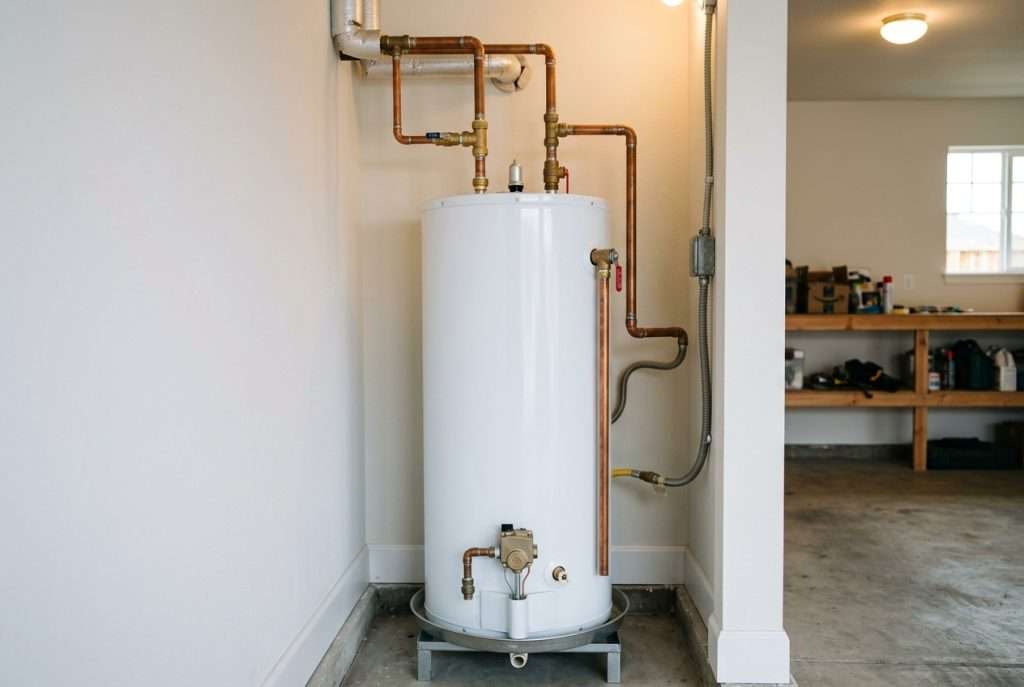
That rotten-egg smell coming from your hot water is almost always hydrogen sulfide gas. It forms when naturally occurring bacteria in the water heater tank react with the magnesium anode rod, the same rod that protects your tank from rust. At the levels found in most homes, it’s not a health hazard, but it won’t go away on its own.
What Causes the Sulfur Smell in Hot Water?
The smell comes from sulfate-reducing bacteria. These microorganisms live in groundwater and thrive in warm, oxygen-poor environments. The inside of a water heater tank fits that description almost perfectly.
Most residential water heaters have a magnesium anode rod. Its job is to corrode instead of the tank walls (that’s how it prevents rust). But as the magnesium breaks down, it releases electrons that sulfate-reducing bacteria use to convert sulfate in the water into hydrogen sulfide gas. That’s the rotten-egg smell.
This is why only your hot water smells. Cold water moves through pipes without sitting in a warm tank full of a corroding metal rod. If both hot and cold water smell, the issue is more likely your water source: a well with high sulfate or hydrogen sulfide levels, or a municipal supply problem.
A few things accelerate the problem:
- Hard water. Areas with high mineral content (common across the San Gabriel Valley, Pasadena, and much of Southern California) give bacteria more sulfate to work with. Hard water also causes faster water heater damage in general.
- Water softeners. Sodium-based softeners can increase the conditions sulfate-reducing bacteria prefer. If the smell started after installing a softener, that’s likely the trigger.
- Low water heater temperature. Tanks set below 120°F create a more hospitable environment for bacterial growth.
- Extended periods of disuse. Vacation homes, guest bathrooms, or any heater that sits idle for a week or more often develop the smell.
Is Rotten-Egg-Smelling Hot Water Dangerous?
At concentrations typical in residential water heaters, hydrogen sulfide is more of a nuisance than a health risk. You’d need sustained exposure to much higher levels (above 10 ppm in air) before it becomes a respiratory concern, and residential water heaters rarely produce anywhere close to that.
Two things to keep in mind:
- Don’t confuse sulfur smell with natural gas. Natural gas is odorized with mercaptan, which also smells like rotten eggs. If you smell it near the water heater but not from the water itself, that could be a gas leak. Turn off the gas, leave the area, and call your gas company.
- Hydrogen sulfide corrodes plumbing over time. It can tarnish copper pipes and fittings and damage water heater components. Fixing the smell also protects your plumbing.
How to Fix Rotten Egg Smell in Your Hot Water
Work through these in order. Most homeowners can handle the first two steps; the third takes more comfort with plumbing.
Flush the Water Heater
Drain and flush the tank to remove sediment buildup and stagnant water where bacteria concentrate. Connect a garden hose to the drain valve at the bottom of the tank, run it outside or to a floor drain, and let the tank empty completely. Then open the cold water inlet for a few minutes to flush loose sediment.
This alone sometimes resolves a mild smell, especially after a long absence. It’s also part of regular water heater maintenance that most homeowners skip.
Replace or Switch the Anode Rod
This is the most effective long-term fix for recurring sulfur smell.
The standard magnesium anode rod is the main contributor to the chemical reaction that produces H2S. Switching to an aluminum/zinc anode rod significantly reduces or eliminates the smell. Zinc disrupts the bacteria’s ability to produce hydrogen sulfide, while aluminum still provides corrosion protection for the tank.
A new anode rod costs $20–$50 for the part. Removing the old one requires a 1-1/16″ socket and sometimes a breaker bar. They corrode in place and can be difficult to loosen, especially on older tanks. If you can’t break it free or aren’t sure which rod fits your heater, this is a good job for a plumber.
Some homeowners switch to a powered (impressed current) anode rod, which uses a small electrical current instead of a sacrificial metal. These eliminate the bacteria reaction entirely but cost $80–$150 and need an outlet nearby.
Disinfect the Tank with Chlorine
For severe or persistent bacterial colonization, a chlorine shock treatment kills the bacteria directly.
- Turn off the water heater (gas or electric) and close the cold water inlet.
- Drain a few gallons from the tank.
- Remove the anode rod or the hot water outlet pipe at the top of the tank.
- Pour in 1–2 gallons of household bleach (unscented, plain sodium hypochlorite).
- Reconnect everything and fill the tank with cold water.
- Let it sit for at least 2 hours — overnight is better.
- Flush thoroughly until you no longer smell chlorine.
This works well, but the smell can return if the original anode rod stays in place. Combine the chlorine treatment with an anode rod swap for the best result.
Check Your Water Softener
If you have a water softener and the sulfur smell appeared after installation or after changing the salt type, the softener may be creating conditions that favor bacteria. Some options:
- Switch from sodium chloride pellets to potassium chloride
- Add a whole-house sediment or carbon filter after the softener
- Have the softener serviced to check for bacterial contamination in the resin bed
When Should You Call a Plumber?
Handle this yourself if it’s a mild smell, you’re comfortable draining the tank, and the anode rod isn’t seized. Call a plumber if:
- The smell persists after flushing and replacing the anode rod
- Both hot and cold water smell (the issue may be the water supply, not the heater)
- You smell rotten eggs near the heater but not from the water — possible gas leak
- Your water heater is 8+ years old and the anode rod has never been replaced (the tank itself may be compromised)
- You’re on well water and the smell is new or suddenly worse
A plumber can also test hydrogen sulfide levels, inspect the tank interior with a camera, and recommend filtration if the problem is your water source rather than the heater.
Risks and Limitations
- Don’t set your water heater above 140°F as a long-term fix. Some advice suggests raising the temperature to kill bacteria. While 140°F does slow bacterial growth, it creates a serious scald risk, especially with children or elderly household members. Use this as a temporary measure only, and install anti-scald valves if you keep the temperature elevated.
- Powered anode rods need an outlet. If your water heater is in a closet or crawlspace without nearby power, installation may require an electrician.
- Tankless water heaters rarely have this problem. They don’t store water, so there’s no stagnant tank for bacteria to colonize. If your tankless unit smells like sulfur, the issue is almost certainly your water supply.
If the sulfur smell persists after trying these fixes, or you’re not comfortable working on your water heater, call Western Rooter & Plumbing at (626) 448-6455 or schedule service online through our website.