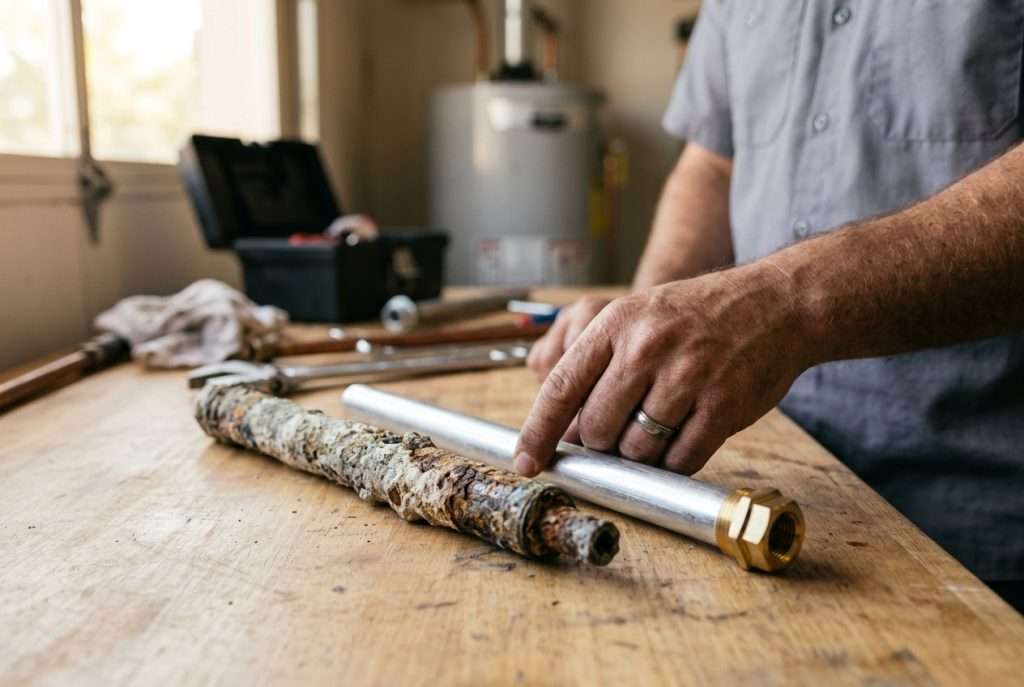
There’s a metal rod inside your water heater that you’ve probably never seen — and it might be the single most important part keeping your tank from rusting out. It’s called the anode rod, and once it’s gone, your water heater’s days are numbered.
Here’s what it does, how to tell when it needs replacing, and why this inexpensive part can save you from a very expensive problem.
What Is a Water Heater Anode Rod?
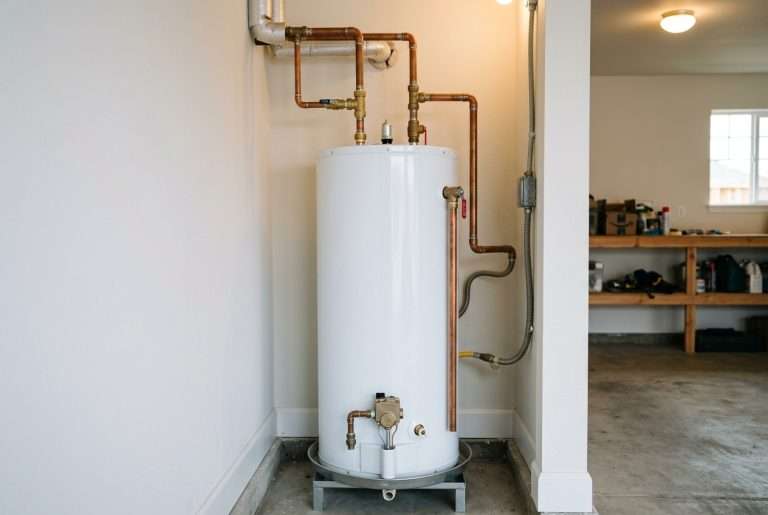
An anode rod is a long metal rod — usually about three to five feet — that screws into the top of your tank water heater. It’s made from a reactive metal, most commonly magnesium or aluminum. Some newer models use a powered (also called “impressed current”) anode instead.
The rod’s entire purpose is to corrode so your tank doesn’t. That’s why plumbers call it a “sacrificial” anode rod. As long as the rod is doing its job, the steel lining inside your water heater stays protected.
Every tank-style water heater has one. If yours is a traditional gas or electric storage water heater, there’s an anode rod inside right now — and it’s slowly dissolving on your behalf.
How Does the Anode Rod Protect Your Water Heater?
The short version: it’s basic chemistry. When two different metals sit in water together, one will corrode faster than the other. This process is called galvanic corrosion.
The anode rod is made from a metal that’s more reactive than the steel tank lining. So the water attacks the rod first, leaving the tank walls alone. As long as the anode rod has material left to give up, your tank stays intact.
Once the rod is fully corroded — eaten away to a thin wire or gone entirely — there’s nothing left to protect the tank. That’s when rust starts working on the tank itself, and once the inside of a water heater starts corroding, there’s no fixing it.
Signs Your Anode Rod Needs Replacing
You can’t see the anode rod without pulling it out, but your water heater gives you clues when it’s wearing thin:
- Rusty or discolored hot water. If your hot water has a brown or orange tint but your cold water runs clear, the anode rod may be spent and the tank is starting to corrode. (Rusty cold water usually points to your supply pipes instead.)
- Rotten-egg smell from the hot water. A sulfur or “rotten egg” odor — especially if it only happens with hot water — often means your magnesium anode rod is reacting with certain bacteria or minerals in your water supply. This is common in areas with well water or high sulfate levels.
- Popping or rumbling noises. This is usually sediment buildup in your tank, but a degraded anode rod can contribute to the problem. If you’re hearing new noises from your water heater, both the sediment and the anode rod are worth checking.
- Your water heater is 3–5 years old and the rod has never been inspected. Most homeowners don’t think about the anode rod until something goes wrong. If your unit has been running for several years without a check, the rod may already be significantly worn.
- Visible corrosion on the rod. If you or a plumber have pulled the rod and it’s down to a thin wire or covered in calcium deposits, it’s time for a new one.
How Often Should You Replace the Anode Rod?
The general rule is every three to five years, but your water chemistry matters more than the calendar.
In hard water areas — and much of the San Gabriel Valley, including Pasadena and surrounding cities, has notably hard water — anode rods tend to wear out faster. Mineral-heavy water is more aggressive, and hard water’s effect on water heaters goes well beyond the anode rod.
Water softeners add another variable. Softened water can actually accelerate corrosion on certain types of anode rods, especially magnesium. If you have a water softener, checking the rod every two to three years is a good idea.
The best approach is to make anode rod inspection part of your routine water heater maintenance. A plumber can check the rod during an annual flush and tell you exactly how much life is left.
Types of Anode Rods
Not all anode rods are the same. The type you need depends on your water quality and what problems you’re trying to solve.
Magnesium anode rods are the most common. They come standard in most water heaters and work well in a wide range of water conditions. Downside: they can produce a sulfur smell if your water has high sulfate content or certain bacteria.
Aluminum or aluminum-zinc anode rods are a good alternative if you’re dealing with that rotten-egg odor. The zinc component helps control sulfur-producing bacteria. They also tend to last a bit longer than magnesium in hard water.
Powered (electronic) anode rods don’t corrode at all. Instead, they use a small electrical current to protect the tank. They cost more upfront, but they last the lifetime of the water heater and eliminate the sulfur smell issue entirely. They’re worth considering if you’re tired of replacing traditional rods every few years.
Can You Replace an Anode Rod Yourself?
Technically, yes — it’s a single part that screws into the top of the tank. But there are a few reasons DIY anode rod replacement doesn’t always go smoothly:
The rod is often seized. Years of corrosion and mineral deposits can lock the anode rod in place. Removing it sometimes requires a breaker bar and serious torque, and overtightening risks damaging the tank fitting.
Clearance matters. A standard anode rod is three to five feet long. If your water heater is in a closet, under low ceilings, or in a tight utility space, you may not have room to pull the rod straight out. Flexible segmented anode rods exist for this situation, but you need to know to buy the right one.
Matching the rod to your water. Swapping magnesium for aluminum (or vice versa) changes how the rod interacts with your water chemistry. Picking the wrong type can introduce new problems, like that sulfur smell.
If the rod comes out easily and you have the clearance, it’s a manageable project. If it’s stuck, if you’re not sure which type to use, or if you want a powered anode rod installed, calling a plumber is the safer move.
What Happens If You Never Replace It?
Nothing dramatic — at first. The anode rod slowly dissolves over a few years, and your water heater keeps running normally. You won’t notice anything different until the rod is gone and the tank itself starts corroding.
Once that happens, rust eats through the tank lining from the inside. Eventually, the tank develops a leak. Sometimes it’s a slow drip from a fitting. Other times, the bottom of the tank gives out and you’re dealing with a flooded garage, utility closet, or worse.
The average tank water heater lasts 8 to 12 years. Homeowners who replace the anode rod on schedule and keep up with maintenance regularly get 15 years or more from the same unit. That extra lifespan means a lot when you consider the cost of a full water heater installation.
A new anode rod is a fraction of the cost of a new water heater. It’s one of the few maintenance tasks that genuinely pays for itself several times over.
Keep Your Water Heater Running Longer
The anode rod is easy to forget about — it’s out of sight, and your water heater doesn’t have a warning light for it. But checking it every few years is one of the simplest ways to protect a major appliance in your home.
If you’re in the San Gabriel Valley or greater Los Angeles area and need water heater services in Pasadena or any nearby city, we can check your anode rod, flush the tank, and let you know exactly where things stand.
If you need help checking or replacing your water heater’s anode rod, call Western Rooter & Plumbing at (626) 448-6455 or schedule service online through our website.