If your shower drips after you shut it off, swings between scalding and freezing, or the handle barely turns anymore, the problem is almost always the valve behind the wall. Replacing a shower valve (or just its internal cartridge) is one of the most common bathroom plumbing repairs, and knowing what you’re dealing with saves you from overpaying or making the problem worse.
What Does a Shower Valve Do?
The shower valve sits inside the wall behind your handle or knob. It controls water flow, mixes hot and cold to the temperature you set, and (in newer valves) prevents sudden temperature spikes when someone flushes a toilet or runs the dishwasher.
Most residential shower valves fall into two categories:
- Pressure-balancing valves automatically adjust the hot/cold ratio when water pressure changes on one side. These are the standard in most homes built after the mid-1990s and are required by code in California for new construction.
- Thermostatic valves maintain a set temperature regardless of pressure or flow changes. They’re more precise but cost two to three times as much.
Inside every valve body is a cartridge, the replaceable internal mechanism that does the mixing and shutoff work. When a shower valve fails, the cartridge is the culprit about 80% of the time.
How Do You Know Your Shower Valve Needs Replacing?
Not every shower problem points to the valve. Before you start pulling things apart, rule out simpler causes like a clogged showerhead or low water pressure from the supply side.
These signs point specifically to the valve or cartridge:
- Dripping after shutoff. If water keeps trickling from the showerhead after you turn the handle fully off, the cartridge seals are worn. This is the most common reason for replacement.
- Temperature swings without anyone else using water. A failing pressure-balancing cartridge can’t compensate properly, so you get random hot or cold surges.
- Handle is stiff, grinds, or spins without engaging. Mineral buildup or a cracked cartridge stem makes the handle hard to turn, or turns it into a loose knob that doesn’t control anything.
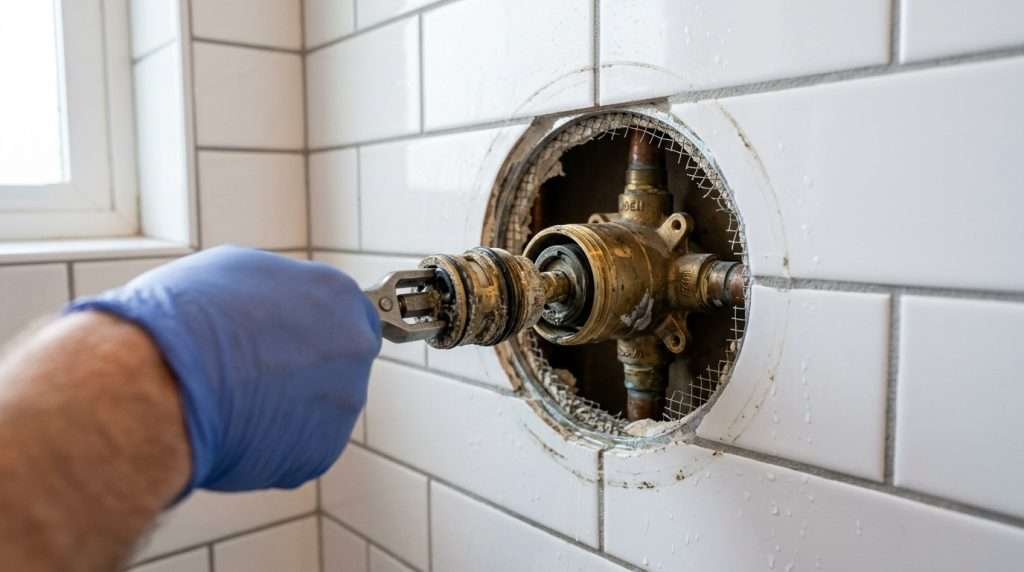
- Visible corrosion or mineral deposits behind the escutcheon plate. Pull the decorative plate off the wall (it usually unscrews or pops off). Green or white crusty buildup on the valve body means hard water has been working on it for years.
- Reduced flow that persists after cleaning the showerhead. If you’ve already cleaned the head and checked for low pressure elsewhere, the valve’s internal passages may be partially blocked.
If your bathtub faucet is also leaking, you may have a shared tub/shower valve — the same unit controls both.
What Types of Shower Valves Are There?
You need to identify your valve type before buying any parts. The wrong cartridge won’t fit, and the wrong valve type may not work with your existing plumbing.
Pressure-balancing (single-handle). One handle controls both temperature and flow. The most common residential type. Brands stamp their name on the cartridge or the valve body — Moen, Delta, Kohler, and Pfister each use proprietary cartridges that aren’t interchangeable.
Thermostatic (usually two-handle or dial). One control sets temperature, another controls flow volume. Found in higher-end installations and accessible showers. More expensive to replace.
Two-handle mixing valves (older homes). Separate hot and cold handles with individual stems and seats. Common in homes built before the 1980s. Parts are still available for most, but upgrading to a pressure-balancing valve during a renovation is worth considering.
How to identify yours: Remove the handle (usually a set screw under a cap) and pull off the escutcheon plate. Look for a brand name stamped on the valve body or the cartridge itself. If you can’t find one, take a photo and bring it to a plumbing supply store. They can usually match it.
Cartridge Replacement vs. Full Valve Replacement
Cartridge replacement is the right call when:
- The valve body (the brass or plastic housing in the wall) is in good shape
- You can identify the brand and find a matching cartridge
- The problem is dripping, stiffness, or temperature inconsistency
A cartridge is the internal moving part. Swapping it fixes most shower valve problems without opening the wall beyond the existing access behind the escutcheon plate.
Full valve body replacement is necessary when:
- The valve body itself is cracked, severely corroded, or leaking from the body (not just the cartridge area)
- You’re switching valve types (e.g., upgrading from a two-handle mixing valve to a pressure-balancing unit)
- The valve is so old that replacement cartridges are no longer manufactured
- You’re remodeling and moving the shower valve to a different position
Full valve replacement means cutting into the wall, soldering or connecting new supply lines, and patching tile or drywall afterward.
What Does Shower Valve Replacement Cost?
Costs vary depending on whether you’re swapping a cartridge or replacing the entire valve assembly.
Cartridge replacement (DIY): The cartridge itself runs $15–$60 depending on the brand. Moen 1222 cartridges (one of the most common) typically cost $25–$35. You’ll need a cartridge puller tool for some brands ($10–$20).
Cartridge replacement (professional): $150–$350 including the part and labor, assuming straightforward access. Most plumbers can do a cartridge swap in under an hour.
Full valve body replacement (professional): $400–$900 or more, depending on:
- Wall access — is there an access panel, or does tile need to come off?
- Pipe material and connections — copper soldering vs. PEX crimp or SharkBite
- Tile or drywall repair after the work
- Whether you’re upgrading valve types
These are general ranges. Actual costs depend on your area, the specific valve, and the condition of the existing plumbing. If the plumber discovers corroded copper or galvanized supply lines once the wall is open, the scope can grow.
Can You Replace a Shower Valve Yourself?
A cartridge swap is a reasonable DIY project if you’re comfortable with basic plumbing. The steps:
- Shut off water to the shower (fixture shutoff valves, or the main if there’s no dedicated shutoff).
- Remove the handle and escutcheon plate.
- Pull the old cartridge. Some slide out; others need a puller tool specific to the brand.
- Insert the new cartridge in the correct orientation (hot side matters).
- Reassemble, turn water back on, and test.
The biggest risk with a cartridge swap is breaking corroded parts during removal, especially the retaining clip or the cartridge itself. If the cartridge is stuck from mineral buildup, applying penetrating oil and letting it soak for 30 minutes before pulling usually helps. Forcing it can crack the valve body, turning a $30 fix into a $600+ valve replacement.
Full valve body replacement is not a beginner project. It involves cutting into the wall, working with supply lines (soldering copper or crimping PEX), waterproofing the area behind the valve, and reassembling everything so it doesn’t leak inside the wall where you can’t see it. Water damage from a bad connection behind tile can go unnoticed for months and cause serious mold and structural problems.
When Should You Call a Plumber?
Call a professional for shower and bathtub repair when:
- You need a full valve body replacement (wall access, pipe work, and waterproofing)
- Your home doesn’t have a dedicated shutoff for the shower and you need the main water shut off
- The cartridge is stuck and won’t come out without force
- You have an older home with galvanized or non-standard plumbing behind the wall
- You’re upgrading to a thermostatic valve (these need precise installation to work correctly)
- You’re not sure what type of valve you have and can’t identify the brand
A plumber can also confirm whether the problem is the valve or something else, like a failing faucet component or a supply-side pressure issue.
If your shower valve is dripping, running inconsistently, or the handle is fighting you every morning, call Western Rooter & Plumbing at (626) 448-6455 or schedule service online through our website.