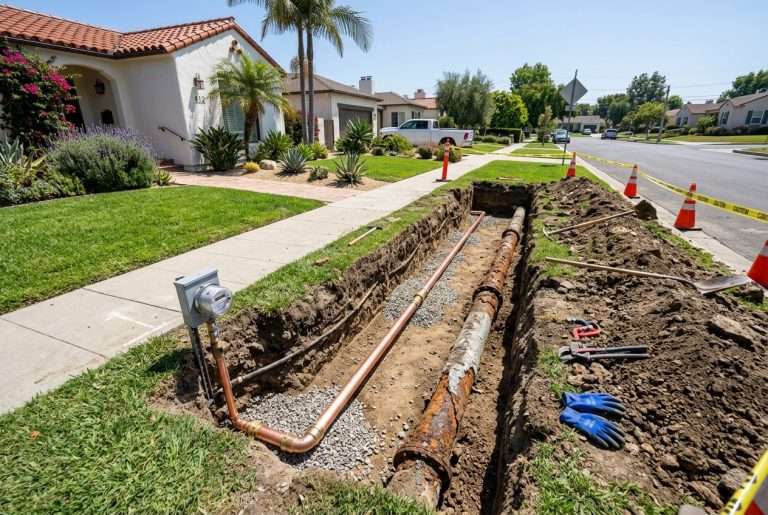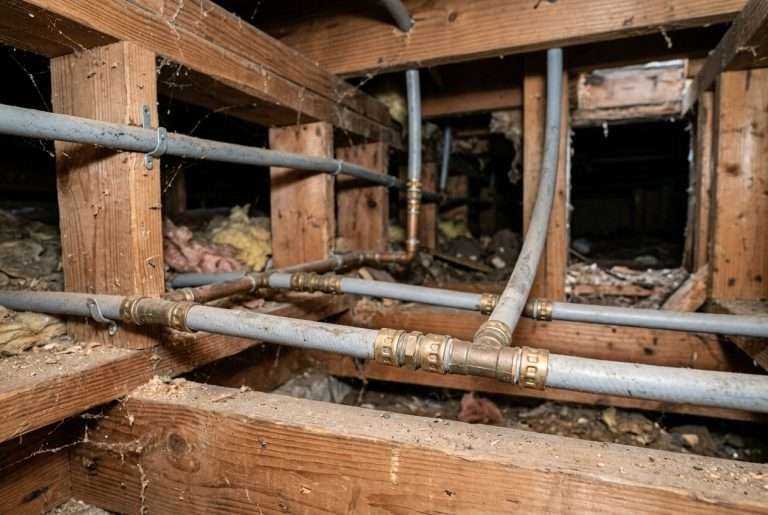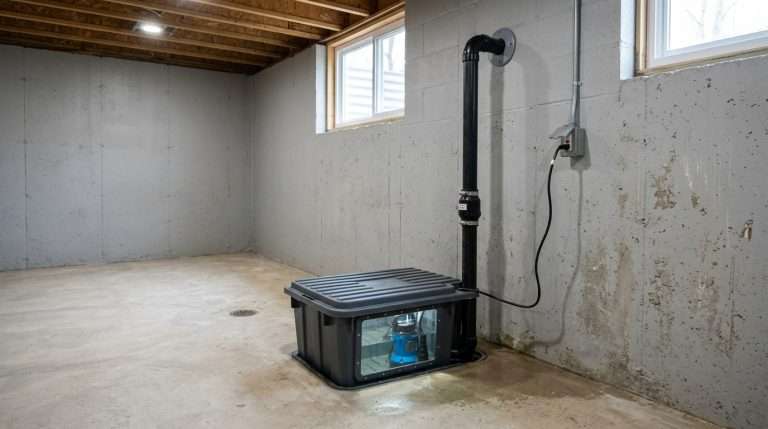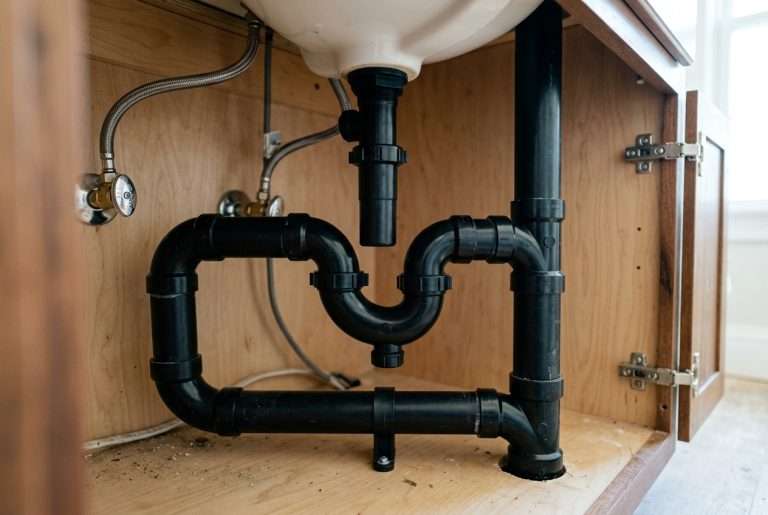
Cast iron pipes can be repaired, but the right method depends on where the damage is, how far it extends, and how much life the rest of the pipe has left. For isolated cracks or small leaks, a repair sleeve, epoxy patch, or cured-in-place liner can buy you years. If the pipe is deteriorating throughout, repair just delays an inevitable replacement.
Here’s how to figure out which situation you’re in.
How Do You Know Your Cast Iron Pipe Needs Repair?
Cast iron doesn’t usually fail all at once. It corrodes from the inside over decades, and by the time you notice problems, the damage has been building for years.
Common signs:
- Slow drains in multiple fixtures, especially if snaking only helps temporarily
- Sewage smell indoors or near your foundation, even when no drain is visibly backed up
- Gurgling sounds from toilets or drains when water runs elsewhere in the house
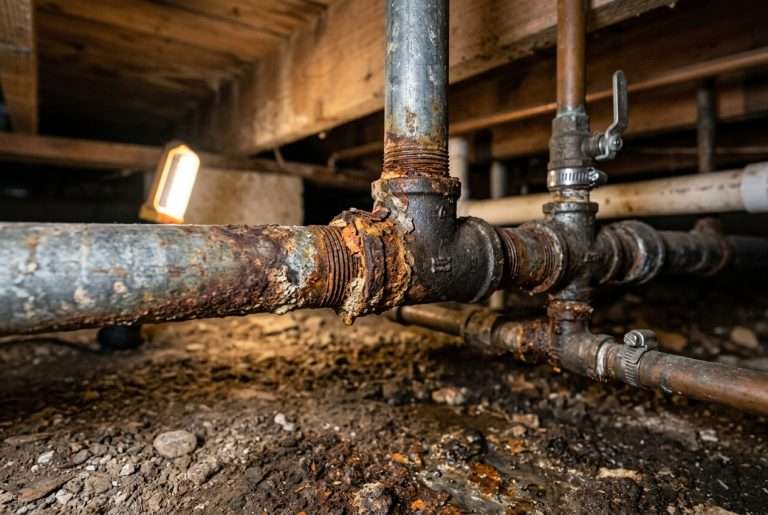
- Rust-colored stains on basement walls, ceilings below bathrooms, or around exposed pipe joints
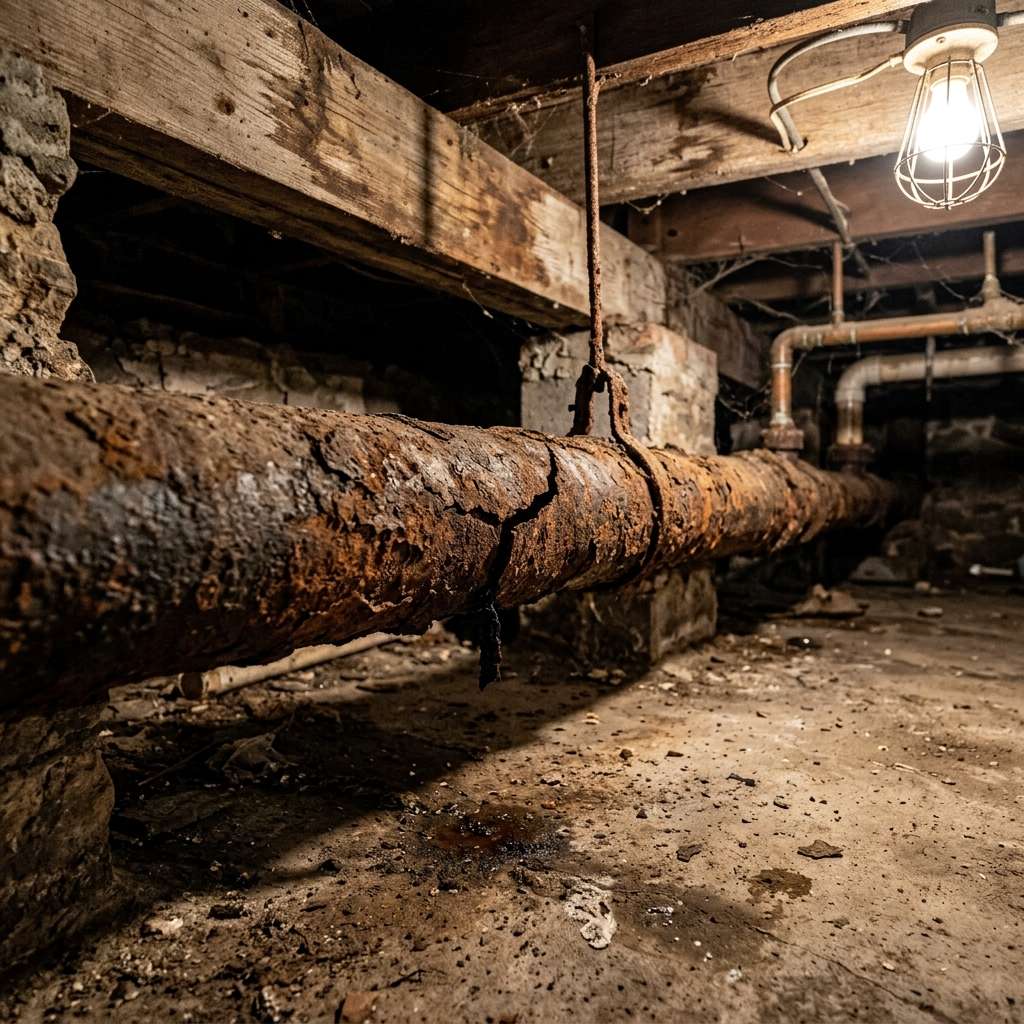
- Cracks or flaking on visible sections of cast iron (in crawlspaces, basements, or utility rooms)
- Pest problems. Cockroaches and rodents can enter through cracked sewer pipes.
If you’re seeing more than one of these, a sewer camera inspection is the fastest way to find out exactly what’s happening inside the pipe. The camera shows the location, type, and extent of damage, which determines whether repair or replacement is the right call.
Can You Patch a Cast Iron Pipe Without Replacing It?
Yes, if the damage is isolated to one section and the surrounding pipe is still structurally sound. There are three main approaches.
Repair Sleeves and Clamps
A stainless steel repair sleeve (sometimes called a band clamp) wraps around the outside of the pipe over the damaged area. A rubber gasket seals against the pipe surface, and the clamp compresses it tight.
Sleeves work well for:
- Single cracks or small holes
- Joint separations where the pipe has shifted slightly
- Accessible pipe sections (basement, crawlspace, exposed runs)
They don’t work for pipes that are heavily corroded, collapsed, or bellied. If the pipe wall is too thin or uneven, the sleeve can’t form a reliable seal.
Epoxy Repair
Epoxy comes in two forms for pipe repair: brush-on liquid for the inside of the pipe, and putty for external patches on small cracks or pinholes.
Brush-on epoxy gets applied through a cleanout or access point and coats the interior pipe wall. It seals small cracks and slows further corrosion. Putty works from the outside: clean the area, apply the epoxy, and let it cure.
Both are temporary measures. Epoxy can hold for several years on minor damage, but it doesn’t restore structural strength. If the pipe wall is already paper-thin from decades of corrosion, epoxy won’t prevent a future collapse.
Pipe Lining (CIPP)
Cured-in-place pipe lining is a trenchless sewer repair method. A flexible liner coated in resin gets inserted into the existing pipe, inflated against the pipe walls, and cured (usually with hot water, steam, or UV light). The result is essentially a new pipe inside the old one.
CIPP works for longer damaged sections (20, 50, even 100+ feet) without digging up your yard or breaking through your foundation. It’s the most durable repair option short of full replacement.
Limitations: the existing pipe needs to be mostly intact in shape. If it’s collapsed, severely bellied, or has major offsets at joints, lining isn’t possible without addressing those problems first.
How Much Does Cast Iron Pipe Repair Cost?
Costs vary significantly depending on the method, pipe location, and how much pipe is involved.
Repair sleeves/clamps: Typically the least expensive option if the pipe is accessible. The parts are inexpensive; most of the cost is labor and access. Expect a few hundred dollars for a straightforward repair on an exposed pipe, more if it’s buried or behind walls.
Epoxy: Similar range to sleeves for external putty repairs. Internal brush-on lining of longer sections costs more, comparable to CIPP in some cases.
CIPP lining: Generally ranges from several thousand to the low five figures depending on pipe length, diameter, access points, and the number of connections that need to be reinstated after lining. It’s less than traditional dig-and-replace in most cases because you’re skipping excavation and landscape restoration. For a detailed breakdown, see our guide on sewer line repair costs.
Full replacement: When repair isn’t viable, replacement costs depend on length, depth, material (PVC or ABS typically replaces cast iron), and whether trenchless methods work for your situation. In Southern California, sewer line replacement commonly runs from a few thousand dollars for short accessible runs to $15,000+ for longer, deeper lines.
A camera inspection before any repair work helps avoid surprises. Repairing one visible crack when the pipe is deteriorating throughout just means another repair call in six months.
When Should You Replace Instead of Repair?
Repair makes sense for isolated, contained damage in an otherwise sound pipe. Replacement makes sense when:
- Corrosion is widespread. If a camera inspection shows thinning, pitting, or rust throughout the pipe, not just at one spot, patching individual sections becomes a losing game.
- The pipe has failed in multiple locations. Two or three separate cracks or leaks in the same run suggest the whole pipe is at end of life.
- The pipe is bellied. A belly (low spot where the pipe has sagged) traps waste and water. Repair sleeves and lining can’t fix the grade. The section needs to be re-laid.
- Age plus symptoms. Cast iron pipes in Southern California homes built before the 1970s are now 50-60+ years old. If an older pipe is already showing problems, the remaining pipe likely isn’t far behind.
If you’re weighing repair vs. replacement on a cast iron sewer line, our comparison of cast iron vs. ABS covers what modern replacement materials offer.
How Long Do Cast Iron Pipes Last?
Cast iron drain and sewer pipes typically last 50 to 100 years. Where your pipe falls in that range depends on:
- Soil conditions — acidic or high-moisture soil accelerates external corrosion
- Water chemistry — hard water (common in the San Gabriel Valley and much of Southern California) leaves mineral deposits that can protect the pipe interior, but also builds up and reduces flow over time
- Maintenance history — pipes that have been regularly descaled and kept clear of root intrusion last longer
- Original quality — pipe wall thickness varied by manufacturer and era
Many homes in Arcadia, Pasadena, Monrovia, and surrounding SGV cities still have original cast iron waste lines from the 1950s and 1960s. At 60-70 years old, these pipes aren’t necessarily failing, but they’re past the point where problems should surprise anyone.
Risks of DIY Cast Iron Pipe Repair
Cast iron is heavy (a 4-inch pipe runs about 12 pounds per foot), brittle when corroded, and awkward to work with in tight crawlspaces or below slabs. A few things to keep in mind:
- Cutting cast iron requires the right tools. A snap cutter or reciprocating saw with a metal-cutting blade works, but corroded pipe can crack unpredictably when cut.
- Temporary clamp repairs are reasonable DIY if the pipe is accessible and the damage is a single clean crack. Anything beyond that (multiple repairs, buried pipe, or connections to the main sewer line) should go to a licensed plumber.
- Code and permits matter. In most Southern California jurisdictions, sewer line repair work that involves replacing sections of pipe or connecting to the public sewer requires a permit. Unpermitted work can create problems when you sell the home.
- Misdiagnosis is common. What looks like one bad joint from outside may be the only visible symptom of a pipe that’s failing throughout. A camera inspection before any repair avoids wasting money on a patch that won’t hold.
If you’ve got a cracked or leaking cast iron pipe and want to know whether repair or replacement makes more sense for your situation, call Western Rooter & Plumbing at (626) 448-6455 or schedule service online through our website.