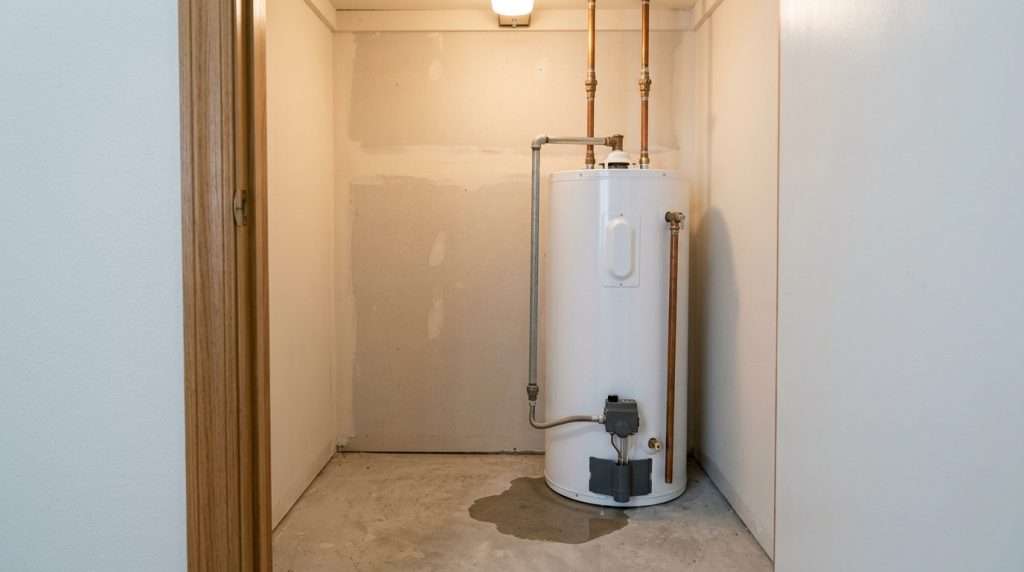
A puddle of water beneath your water heater is never something to ignore. It might be a simple fix — or it could mean the tank is failing and needs to be replaced. Either way, knowing what’s causing the leak helps you make the right call fast.
Below, we’ll walk through the most common reasons a water heater leaks from the bottom, whether the situation is dangerous, and what steps to take right now.
Why Is My Water Heater Leaking from the Bottom?
Not every leak means your water heater is done for. Here are the most common culprits:
Drain Valve Is Loose or Faulty
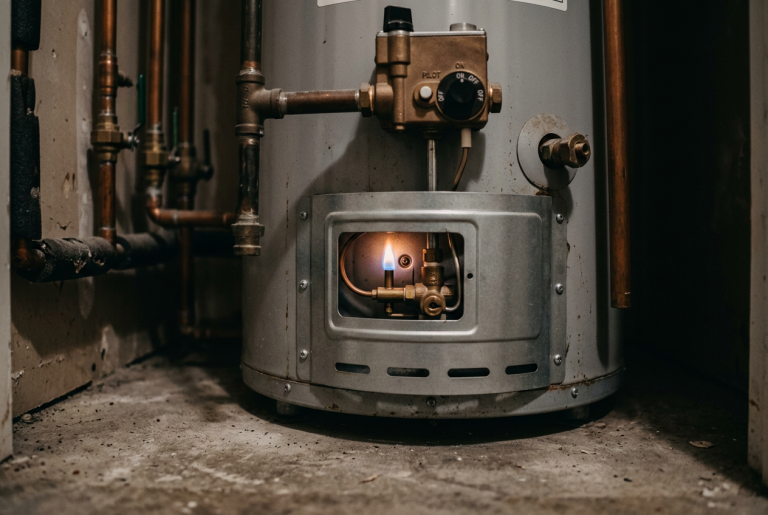
Every tank-style water heater has a drain valve near the bottom. It’s used during maintenance to flush sediment out of the tank. Over time, the valve can loosen or the internal washer can wear out, causing a slow drip.
This is usually the easiest fix. Tightening the valve with a wrench may stop the leak. If the valve itself is damaged, a plumber can replace it without replacing the whole unit.
Internal Tank Corrosion
This is the one homeowners worry about most — and for good reason. Tank-style water heaters have a glass-lined steel tank that gradually corrodes from the inside, especially when sediment builds up at the bottom. Once corrosion eats through the tank lining, water seeps out, and there’s no patching it.
If your water heater is showing other signs of failure like rusty water, loud popping noises, or inconsistent temperatures, internal corrosion is the likely cause. At that point, replacement is the only real fix.
Temperature and Pressure (T&P) Relief Valve Discharge
The T&P relief valve is a safety device mounted on the side or top of the tank. It has a discharge pipe that runs down to the floor. If the valve opens — because of excess pressure or temperature — water drains out of that pipe and pools near the bottom of the heater.
A T&P valve that’s doing its job occasionally is normal. But if it’s leaking constantly or dripping steadily, that can signal high water pressure, a faulty valve, or an overheating issue that needs professional attention.
Condensation (Not Always a Leak)
Sometimes what looks like a leak is actually condensation. This is more common with newer or high-efficiency water heaters, especially during heavy use periods (like several back-to-back showers). The cold incoming water causes moisture to form on the outside of the tank, and it drips down to the floor.
Condensation usually dries up on its own within a few hours. If the water keeps appearing, you’re probably dealing with one of the issues above.
Is a Leaking Water Heater Dangerous?
It depends on the severity, but a water heater leak should always be taken seriously:
- Water damage and mold. Even a slow leak can saturate drywall, flooring, or stored items nearby. Standing moisture promotes mold growth, which can become a health issue.
- Gas leaks (gas heaters). If water damages the gas control valve or connections, there’s a small but real risk of a gas leak. If you smell gas near your water heater, leave the area and call your gas company immediately.
- Electrical hazards (electric heaters). Water and electricity don’t mix. A leaking electric water heater near exposed wiring or in a wet area can create a shock risk.
- Sudden tank failure. A badly corroded tank can rupture, releasing 40–80 gallons of hot water at once. That’s a flooding event — and an emergency.
The bottom line: a small drip from the drain valve is low risk. A spreading puddle under an aging tank is a much bigger concern.
Electric vs. Gas Water Heaters — Does the Leak Source Differ?
The most common causes of bottom leaks are the same for both types: drain valve issues, tank corrosion, and T&P valve discharge.
The main differences:
- Electric heaters have heating elements inserted into the tank. If a gasket around one of these elements fails, water can leak from the side or bottom area. This is repairable.
- Gas heaters may produce more condensation because the burner creates temperature swings inside the tank. They also have a gas control valve near the bottom — if water reaches it, have a plumber inspect the unit before relighting.
What to Do Right Now If Your Water Heater Is Leaking
If you spot water pooling under or around your water heater, here’s what to do:
- Turn off the power. For a gas heater, set the gas valve to the “pilot” or “off” position. For an electric heater, flip the breaker at your electrical panel.
- Shut off the cold water supply. There’s a valve on the cold water inlet pipe at the top of the heater. Turn it clockwise to close it. If you can’t reach it safely (wet floor, electrical concerns), shut off your home’s main water supply instead.
- Identify the source. Dry the area around the heater and watch where new water appears. Check the drain valve, the T&P discharge pipe, and the fittings on top. If water is coming from the bottom of the tank itself, that usually means internal corrosion.
- Mop up standing water. Remove water to prevent damage to flooring and nearby items.
- Decide: wait or call. If it’s a slow drip from the drain valve, you may be able to tighten it yourself and monitor. If the tank itself is leaking, water is spreading, or you smell gas, call a plumber right away.
Can a Leaking Water Heater Be Repaired, or Does It Need Replacement?
That depends entirely on where the leak is coming from:
- Drain valve — Usually repairable. Tightening or replacing the valve is a straightforward job.
- T&P relief valve — The valve itself can be replaced. But if it keeps triggering, a plumber needs to check your water pressure and thermostat settings.
- Heating element gasket (electric) — Repairable. The gasket or element gets replaced, and the tank is still good.
- Internal tank corrosion — Not repairable. Once the tank is leaking from corrosion, it needs to be replaced. Most tank-style water heaters last 8 to 12 years. If yours is in that range and leaking from the bottom of the tank, replacement is the practical path forward.
Regular flushing and maintenance can slow sediment buildup and extend tank life, but it can’t reverse corrosion that’s already happened.
If you’re weighing repair vs. replacement, the age of the unit matters most. A 10-year-old heater with a corroded tank isn’t worth sinking money into — especially when modern installations are more energy efficient and come with new warranties.
When to Call a Plumber
Some water heater leaks are manageable DIY situations. But call a licensed plumber if:
- The leak is coming from the tank itself (not the valve or fittings)
- Water is spreading or the volume is increasing
- You smell gas near the unit
- The water heater is more than 8 years old and showing multiple issues
- You can’t identify where the water is coming from
A plumber can diagnose the exact source, tell you whether a repair makes sense, and handle the replacement safely if the tank has failed.
If your water heater is leaking and you’re not sure what to do next, call Western Rooter & Plumbing at (626) 448-6455 or schedule service online through our website.