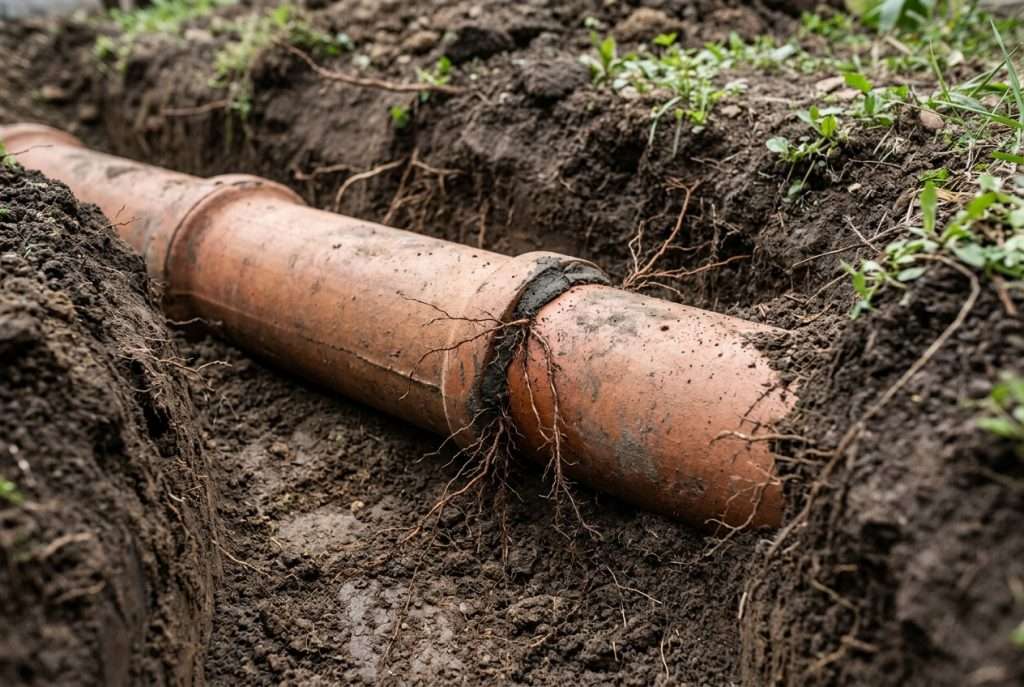
Tree roots don’t need an invitation to invade your plumbing. They find tiny leaks or loose joints, then keep growing until your drains slow down, gurgle, or back up. If you own a home in Southern California—especially one with mature trees and older sewer lines—roots in pipes are a common cause of repeated plumbing headaches.
Here’s how to spot root intrusion, how pros clear it, when repair is needed beyond cleaning, and how to keep roots from taking over again.
Why Do Tree Roots Grow Into Pipes?
Roots follow moisture and nutrients. A sewer line is a steady source of both. Even a hairline crack or a slightly open joint can leak enough water into the soil for nearby roots to zero in on it.
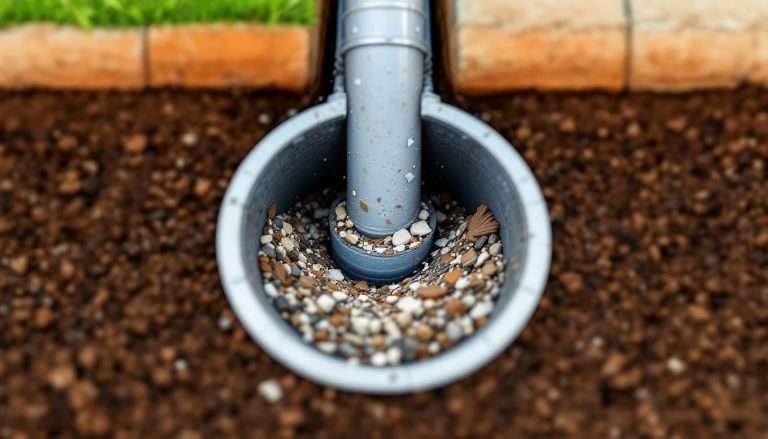
Many older homes still use clay or cast-iron sewer pipes with joints every few feet. Fine roots slip through those joints, then thicken into a dense mass that traps paper, grease, and debris. PVC is tougher, but it still fails when cracked, poorly joined, or already damaged.
Southern California is a perfect setup for this: mature trees, dry soil that pushes roots toward any reliable moisture, and neighborhoods with aging underground laterals. You don’t need a huge tree sitting on the line—landscaping near the sewer path is often enough.
Warning Signs of Roots in Your Pipes
How do you tell if you have roots in your pipes? One symptom alone isn’t proof, but combinations raise a red flag:
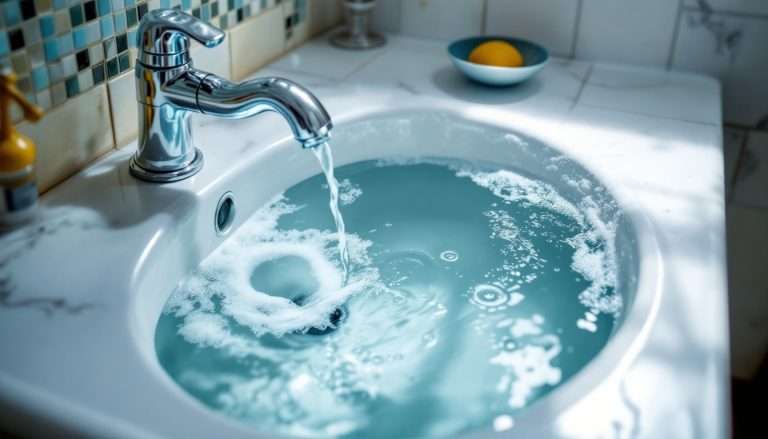
- Slow drains on multiple fixtures. One clogged sink can be local. Slow showers, tubs, and toilets across the house often mean a main-line problem.
- Gurgling toilets or drains. A partial blockage traps air so fixtures bubble when something else empties.
- Clogs that keep coming back. If plunging or a store cleaner helps for a week or two, then the backup returns, something is still waiting in the pipe—often root mass.
- Sewage odor in the yard. Smell along the sewer path can mean roots opened an escape for gas or wastewater.
- Wet, spongy, or sunken lawn spots. Escaping water softens soil and can leave strips of dead grass.
- Backups into the lowest drains. Floor drains or the lowest toilet usually fail first when the line is blocked.
These are classic symptoms of tree roots in a sewer line. They’re also a cue to stop temporary cleanouts and get a real look at the pipe.
How Plumbers Diagnose Root Intrusion
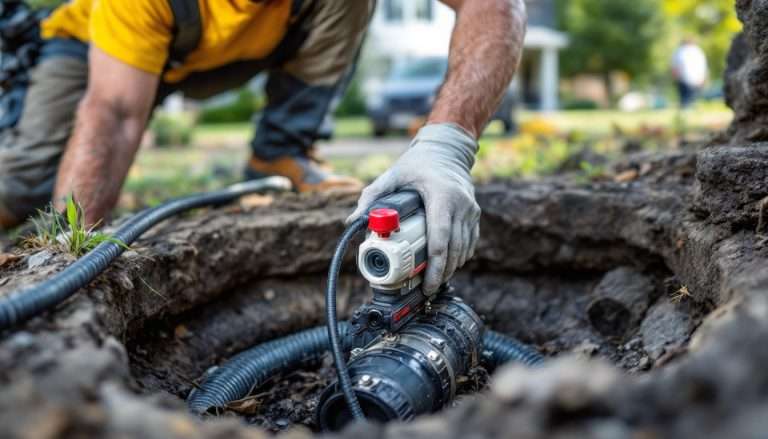
The reliable way to confirm roots is a sewer camera inspection. A small camera on a flexible cable runs through the line while the tech watches live video. That feed shows:
- Whether roots are at a joint, crack, or offset
- How dense the invasion is (a few strands vs. a thick mat)
- Bellies, broken sections, or corrosion that will keep attracting roots
- Rough location relative to the house and cleanouts
Camera findings decide the next step—cleaning, jetting, lining, or replacement. Without that view, it’s easy to pay for a short-term clear and sit through the same mess again months later.
Professional Root Removal Methods
What happens when roots grow into pipes? Openings get worse as roots force materials apart, and the growing mass acts like a net for everything going down the line. Flow drops, backups climb, and pipe condition often declines faster than if the line stayed sealed.
Mechanical root cutting (cable machines / rooters) spins blades through the blockage. It can restore flow quickly. Roots often regrow if the pipe is still open to soil.
Hydro jetting uses high-pressure water to cut roots and scour grease and scale from pipe walls. When the line is still structurally sound, jetting usually gives a cleaner, longer-lasting reset than cutting alone. It’s a main tool in professional drain cleaning for root-related main-line problems.
Chemical root treatments—including copper sulfate and foaming products people search for when asking “what dissolves tree roots in sewer lines”—are closer to maintenance helpers than primary repairs. Results vary, contact time matters, and chemicals won’t fix a cracked or collapsed pipe. DIY chemical-only approaches often fail when the line is open, damaged, or packed with root mass and solids. For most active intrusions, camera-guided professional clearing is the safer first move.
When Root Removal Isn’t Enough — Pipe Repair Options
If the camera shows failed joints, long cracks, or collapse, clearing roots is only step one. Without sealing or replacing the damaged pipe, new growth finds the same openings.
Common professional options include:
- Trenchless pipe lining (CIPP-style) — When conditions allow, a liner creates a new sealed surface inside the existing pipe with less digging.
- Pipe bursting — A new pipe is pulled through while the old one is broken outward, useful when the line needs full replacement in place.
- Traditional excavation — Right call for severely collapsed, misaligned, or inaccessible stretches where trenchless work isn’t a fit.
The camera (and sometimes line locating) decides the approach. Cost depends on severity, access, method, and overall pipe condition—not a number a blog can responsibly invent. When homeowners ask how much it costs to get rid of roots in a sewer line, the useful answer starts with inspection, then compares cleaning-only versus sewer line repair that closes the openings roots use.
Does insurance cover roots in pipes? Root intrusion is often treated as homeowner maintenance rather than a standard claim, but policies differ. Check with your insurer—and don’t delay if you already have backups.
Preventing Roots From Coming Back
You can’t control every neighborhood tree, but you can reduce repeats:
- Maintenance jetting if you’ve already had roots and the line is still intact
- Root barriers when landscaping near the sewer path
- Strategic planting—keep large water-seeking trees well away from the lateral
- Upgrading old clay or cast-iron to modern materials when major work is already planned
- Periodic camera checks on older homes, especially after temporary cleanings that never go the distance
When to Call a Plumber
Call if you notice several of these signs, if backups keep returning, if you smell sewage outdoors, or if raw sewage has already entered a fixture. Call before dumping chemicals as your only plan—and call promptly after any sewage backup so the line can be assessed and cleaned properly.
Tree roots in pipes start small and become chronic: moisture draws roots, openings let them in, and growth turns a defect into repeated clogs. The fix is diagnosis, the right clearing method, and repair when the pipe itself has failed.
If you suspect tree roots in your sewer line, call Western Rooter & Plumbing at (626) 448-6455 or schedule service online through our website.