A working water heater is something most San Gabriel Valley homeowners take for granted—until the morning the shower runs ice cold or a puddle appears on the garage floor. Water heaters don’t usually fail without warning. They send signals weeks or even months before complete breakdown occurs. Recognizing these early warning signs can save thousands in emergency repairs, prevent water damage, and help families avoid the inconvenience of living without hot water.
Most residential water heaters are built to last 10 to 15 years under normal conditions. However, the hard water common throughout Pasadena, Arcadia, and surrounding communities accelerates wear on tank components and reduces that lifespan significantly. Mineral deposits build faster, corrosion spreads quicker, and heating elements work harder. Understanding what a failing water heater looks like—and what each symptom means mechanically—helps homeowners make informed decisions about repair versus replacement before a crisis hits.
Rusty or Discolored Water Coming from Taps
When hot water runs brown, red, or rust-colored from the faucet, the water heater tank is likely corroding from the inside. This discoloration comes from rust particles mixing into the water supply as the protective glass lining inside the tank breaks down. Once the steel tank underneath is exposed to water, oxidation begins. Rust spreads quickly, and the structural integrity of the tank weakens.
Homeowners should test whether the rust originates from the water heater or the home’s pipes. Run only the cold water tap for several minutes. If the water stays clear, the problem is isolated to the hot water system. If both hot and cold water show discoloration, galvanized pipes may be corroding instead. Either way, professional diagnosis is necessary.
In the San Gabriel Valley, hard water accelerates this process. High mineral content causes scale buildup that chips away at the protective lining faster than in areas with softer water. Once rust appears in the hot water, replacement is usually the only option. Tank corrosion cannot be reversed. Patching or coating attempts typically fail within months because the internal damage is too extensive. At this stage, property owners should consult with a residential plumbing professional to evaluate replacement options before a leak develops.
Strange Sounds: Rumbling, Popping, or Banging Noises
A water heater that rumbles, pops, or bangs is not haunted—it’s struggling with sediment buildup at the bottom of the tank. As water heats, minerals separate and settle on the tank floor. Over time, this sediment layer hardens into a thick crust. When the burner fires, water trapped beneath the sediment layer boils and forces its way through the crust, creating popping sounds. The rumbling occurs as the heating element works harder to transfer heat through the insulating layer of sediment.
These sounds indicate the water heater is losing efficiency. The sediment layer forces the burner to run longer cycles to reach the desired temperature. Heating elements in electric models can burn out prematurely. Gas burners stay lit longer, increasing fuel costs. The tank itself experiences uneven heating, which stresses the metal and accelerates corrosion where sediment sits heaviest.
In most cases, a professional can drain and flush the tank to remove sediment buildup. This service extends the heater’s life if performed early and regularly. However, if the sounds persist after flushing, or if sediment has calcified too heavily to remove, replacement may be necessary. Homeowners in Pasadena and surrounding areas should schedule annual flushing as preventive maintenance due to the region’s hard water. Waiting until loud noises develop often means the damage is already significant. If strange sounds coincide with other symptoms like inconsistent temperature or visible corrosion, the unit is likely approaching failure.
Inconsistent Water Temperature Throughout the Day
Water temperature that fluctuates without adjusting the thermostat points to a failing heating element, a malfunctioning thermostat, or heavy sediment accumulation. In electric water heaters, one of the two heating elements may have burned out. The remaining element struggles to maintain consistent heat, resulting in periods of lukewarm or cold water between recovery cycles. In gas models, a faulty thermostat or sediment blocking the burner flame from the tank bottom causes similar symptoms.
Inconsistent temperature often worsens gradually. At first, the hot water runs out faster than usual. Then temperature drops mid-shower become noticeable. Eventually, the heater cannot maintain any hot water for extended periods. This progression indicates the unit is losing its ability to store and maintain thermal energy, a core function of tank-based systems.
Sediment buildup is often the culprit, especially in areas with hard water like Arcadia and the broader San Gabriel Valley. The mineral layer acts as an insulator, preventing efficient heat transfer from the gas burner or electric elements to the water. The thermostat may read the correct temperature at the sensor location, but the bulk of the water remains cooler. Flushing the tank sometimes resolves the issue if caught early.
However, if a heating element has failed or the thermostat is malfunctioning, replacement of those components may be possible. A qualified technician can test the electrical components and determine repair viability. In older units approaching 10 to 12 years of service, replacing failing parts often only delays inevitable full replacement. At that point, upgrading to a tankless water heater installation may offer better long-term value and eliminate many of the maintenance issues associated with traditional tank systems.
Visible Corrosion on the Tank or Connections
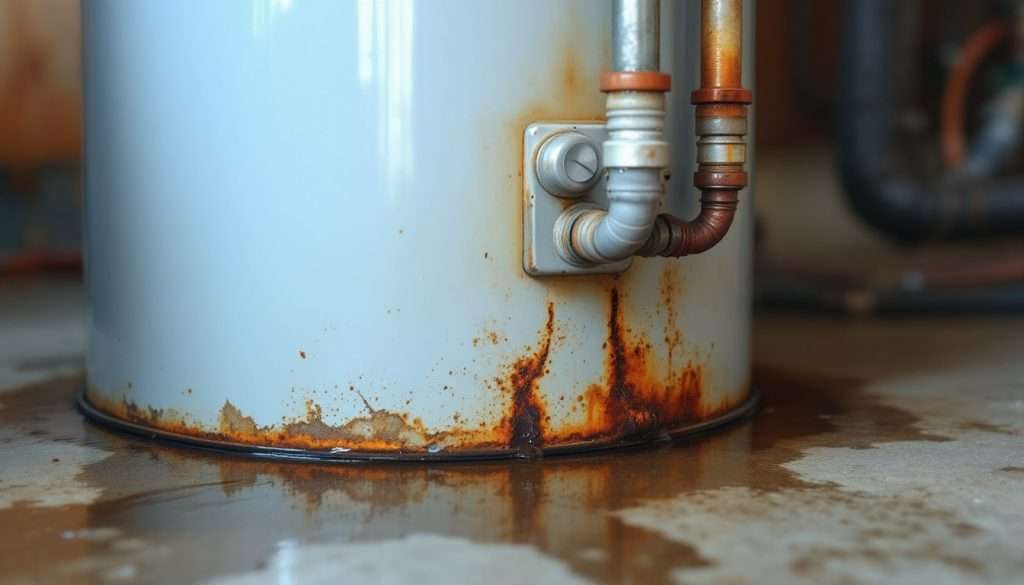
Corrosion on the outside of the water heater tank or around pipe connections signals moisture exposure and potential leaks. Surface rust around the top fittings often develops from condensation, minor leaks at threaded connections, or pressure relief valve drips. While not always catastrophic, external corrosion indicates that seals are failing or fittings have loosened over time.
Rust on the tank body itself is more serious. The exterior steel shell protects the inner tank. If moisture has penetrated to the point where external rust is visible, the tank’s structural strength is compromised. Corrosion spreads outward from a moisture source. In many cases, what appears as minor surface rust on the outside corresponds to significant internal corrosion.
Homeowners should inspect the area around the temperature and pressure relief valve carefully. This safety device releases pressure if the tank overheats. A constantly dripping or corroded relief valve may indicate excessive pressure inside the tank, a failing valve, or both. Replacing the valve is inexpensive, but if corrosion has spread to surrounding metal, the situation is more urgent.
Tank corrosion cannot be repaired reliably. Welding a patch to a rusted tank is dangerous and violates most building codes. Any visible corrosion on the tank body means the unit is nearing the end of its functional life. The question is not if it will leak, but when. At this stage, proactive replacement prevents emergency situations like flooded garages or water-damaged property. Residents should contact a 24-hour emergency plumber if corrosion appears suddenly or worsens rapidly, as these are signs of imminent failure.
Water Pooling Around the Base of Your Heater
A puddle forming near the water heater is never normal. While condensation can create small amounts of moisture, persistent pooling indicates an active leak. The source might be a leaking pressure relief valve, a crack in the tank, or a failed drain valve. Each requires different responses, but all demand immediate attention.
First, check the pressure relief valve and the drain valve at the bottom of the tank. These are the most common non-critical leak sources. The pressure relief valve may need replacement if it drips continuously. The drain valve, especially plastic models, can crack or fail to seal properly after use. Both components can be replaced without replacing the entire unit if the tank itself is sound.
If water is coming from the tank itself, replacement is the only solution. Tank leaks typically originate at the bottom where sediment, corrosion, and stress fractures develop. The metal expands and contracts with heating cycles, and years of this thermal stress eventually compromise the tank integrity. Small leaks grow quickly once they start. A slow drip can turn into a steady stream within days or hours.
Hard water in the San Gabriel Valley contributes to faster tank failure. Mineral deposits concentrate at the bottom, and as sediment accumulates, it creates an abrasive layer that wears through the protective lining. Corrosion accelerates in these areas, and the tank develops weak points. Homeowners should never ignore water pooling around the heater, even if the amount seems minor. The consequences of a catastrophic tank failure—flooding, property damage, and potential mold growth—far outweigh the cost of early intervention. Installing a water filtration system can help reduce mineral buildup and extend the life of future water heaters.
Your Water Heater Is Over 10 Years Old
Age alone is a warning sign for water heaters. Most residential tank models are designed for 10 to 15 years of service under ideal conditions. The manufacturing date is stamped on the identification label, usually as a coded serial number. The first two digits often indicate the year of manufacture. For example, a serial number starting with “14” likely means the unit was built in 2014.
As water heaters age, their efficiency declines. Sediment builds faster, heating elements weaken, and the anode rod—a critical corrosion-prevention component—deteriorates. The anode rod is a sacrificial metal rod inside the tank designed to attract corrosive elements in the water. Once this rod is consumed, the tank itself begins corroding. Most anode rods last five to seven years, and few homeowners replace them. By year 10, the rod is usually gone, and internal corrosion is underway.
An aging water heater costs more to operate. As sediment accumulates and components wear, the unit must work harder to maintain temperature. Energy bills rise gradually, often unnoticed until compared year-over-year. The risk of failure also increases sharply after the 10-year mark. Emergency breakdowns, leaks, and complete failures are statistically far more common in units over a decade old.
In Pasadena, Arcadia, and throughout the San Gabriel Valley, hard water reduces this lifespan further. Units in high-mineral areas often show age-related symptoms at eight or nine years instead of 12 or 15. Property owners should evaluate water heater replacement proactively once the unit reaches double digits. Waiting for failure often means dealing with emergency repairs, water damage, and the inconvenience of losing hot water unexpectedly. Planning a replacement during the final years of service allows for research, budgeting, and scheduling at a convenient time rather than in crisis mode.
Rising Energy Bills Without Explanation
A sudden or gradual increase in gas or electric bills can trace back to a struggling water heater. Heating water accounts for roughly 15 to 20 percent of home energy use, making the water heater one of the largest energy consumers in the house. As the unit ages or develops internal problems, its efficiency drops and energy consumption rises.
Sediment buildup is the most common efficiency killer. The layer of minerals at the tank bottom acts as an insulator, forcing the burner or heating elements to run longer to heat the same volume of water. The thermostat senses lower temperatures and keeps the heat source active, cycling more frequently and consuming more fuel or electricity. Over months, this inefficiency compounds into noticeably higher utility bills.
Failed or failing heating elements in electric models also cause energy spikes. If one element is weak or burned out, the second element runs constantly trying to compensate. The heater never reaches optimal efficiency, and the constant operation drives up costs. Similarly, a malfunctioning thermostat can cause the unit to overheat or cycle improperly, wasting energy.
Homeowners should compare current energy bills to the same months in previous years. If usage patterns have not changed but costs have risen 10 to 20 percent or more, the water heater may be the cause. A professional inspection can measure the unit’s efficiency and identify whether repair or replacement is the better investment. In many cases, replacing an inefficient 10-year-old tank with a modern high-efficiency model pays for itself within a few years through reduced energy costs.
Residents considering replacement should evaluate both traditional tank and tankless options. Tankless models eliminate standby heat loss and offer greater energy efficiency for many households. However, they require adequate gas line capacity and may not suit every home’s layout. Consulting with a residential plumbing professional helps determine the best option for specific needs and budgets.
Conclusion: Take Action Before Emergency Strikes
A failing water heater rarely catches homeowners completely by surprise if they know what signs to watch for. Rusty water, strange noises, inconsistent temperature, visible corrosion, pooling water, advanced age, and rising energy bills all indicate a unit approaching the end of its service life. Each symptom provides valuable information about what is happening mechanically inside the system, and each offers a window of time to make informed decisions before failure occurs.
In the San Gabriel Valley, hard water accelerates many of these problems. Residents in Pasadena, Arcadia, and surrounding areas should pay close attention to their water heaters and schedule regular maintenance to catch issues early. Flushing the tank annually, inspecting for leaks, and monitoring performance can extend a unit’s life. However, once multiple warning signs appear—especially in units over 10 years old—replacement is usually the most cost-effective and reliable solution.
Western Rooter & Plumbing serves the San Gabriel Valley with expert water heater diagnostics, repair, and replacement services. Whether your water heater shows one warning sign or several, professional evaluation provides clarity and peace of mind. Do not wait for an emergency midnight leak or a freezing cold shower to take action. Contact us today to schedule an inspection and ensure your home has reliable hot water year-round.