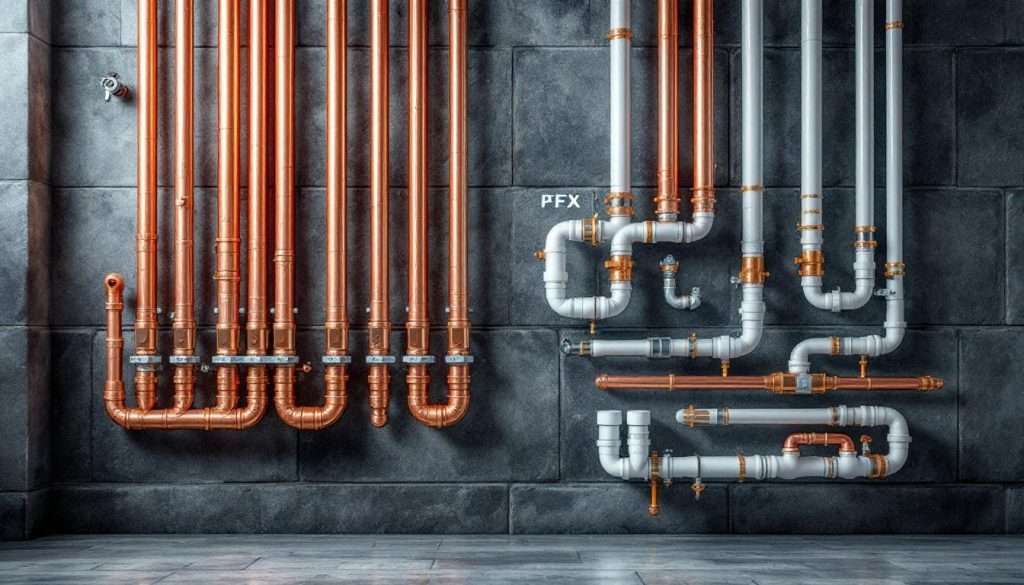
If your San Gabriel Valley home has original plumbing from the 1970s or earlier,迟早 you will face the decision of whether to repipe and what material to use. Two materials dominate the conversation: copper and PEX (cross-linked polyethylene). Both have been used for residential water supply for decades. Both are code-approved. Both are installed by licensed plumbers throughout California.
The choice between them is not ideological — it is practical, and the right answer depends on your home’s construction, your budget, how long you plan to stay, and whether your current pipes have specific problems that one material solves better than the other.
This guide cuts through the marketing and gives you a direct comparison for the San Gabriel Valley context.
What Each Material Is
Copper has been the standard for residential water supply since the mid-20th century. It comes in rigid sections joined by soldering (sweating) with a torch. Copper is a metal, which means it conducts heat, is rigid enough to bracket easily, and has a proven track record spanning 80+ years in residential plumbing.
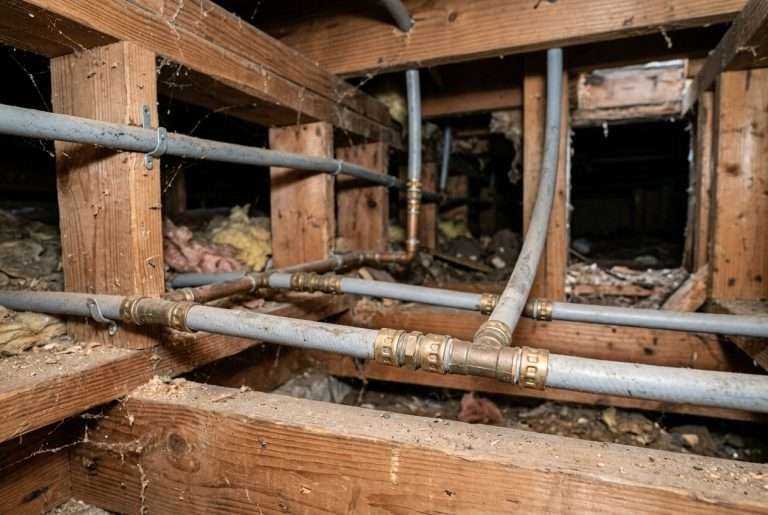
PEX is a flexible plastic tubing introduced for residential use in the 1980s and adopted increasingly into building codes starting in the 2000s. It is joined using crimp fittings or compression fittings, with no torch or solder required. PEX comes in coils and bends around corners without couplings, which reduces the number of joints in the system.
How They Compare on the Factors That Matter
Lifespan and durability:
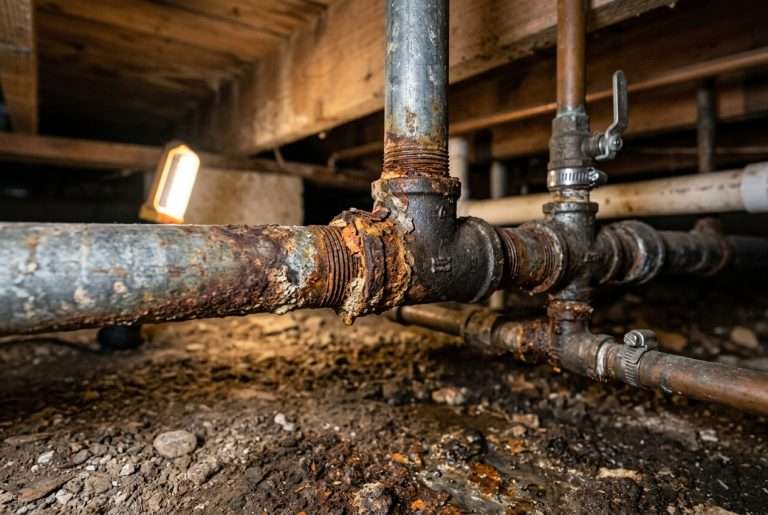
Copper is rated for 50 to 70 years under normal conditions, though in the San Gabriel Valley’s specific water chemistry, copper pipes in homes with aggressive (low pH) water can develop pinhole leaks in as little as 20 to 30 years. PEX is rated for 50 to 100 years, and because it is plastic, it is immune to corrosion from water chemistry. For homes with known hard water or acidic water conditions in Glendora, Covina, or Azusa, PEX’s immunity to corrosion is a significant practical advantage.
Cost:
Copper repiping costs significantly more than PEX in 2026 due to copper’s commodity pricing volatility. A full repipe of a 2-bathroom home with copper costs $8,000 to $18,000 depending on accessibility. The same home with PEX costs $5,000 to $12,000. Copper material costs alone are 2 to 3 times higher than PEX material, and copper installation requires more skilled labor (torch soldering) which also drives up cost. For budget-conscious homeowners, PEX is the less expensive option.
Freeze resistance:
PEX has a significant advantage here. Because PEX tubing is flexible, it expands slightly when water inside freezes and contracts back when thawing. Copper is rigid and can crack or burst if the water inside freezes. This matters for homes in Glendora and San Dimas where occasional freezing overnight temperatures occur in winter, and for any pipes running through unheated garages or crawlspaces.
Installation invasiveness:
PEX’s flexibility allows it to be snaked through existing walls with fewer holes opened compared to rigid copper, which requires more cutting and fitting at every turn. For a whole-house repipe in an occupied home, PEX typically results in less drywall repair after the installation.
Water quality:
Some homeowners with older copper systems notice a slight metallic taste in their water, particularly in the morning or after periods of non-use. This can be from copper corrosion in the pipes or from the copper’s interaction with certain water chemistry. PEX does not impart any metallic taste. For homeowners who notice or are concerned about copper’s effect on water taste, PEX is neutral.
Noise:
Copper pipes produce a characteristic hammering sound (water hammer) when valves close quickly. PEX dampens sound because the material absorbs pressure surges rather than transmitting them. For interior walls adjacent to bedrooms, PEX’s quieter performance is a practical benefit.
Code acceptance:
Both materials are fully approved by California Plumbing Code and by all municipalities in the Los Angeles area. Neither is universally required or prohibited in any city in the San Gabriel Valley. Your plumber uses whichever material is appropriate for your specific situation.
When Copper Makes More Sense
Despite PEX’s cost and practical advantages in most situations, copper is the better choice in specific circumstances:
Homes with active pest infestation. Rodents and some insects can chew through PEX tubing. If your home has or has had a significant rodent problem, copper’s hardness provides a meaningful level of protection that PEX cannot provide. Discuss your pest history with your plumber before deciding.
Outdoor or above-ground exposed piping. PEX is not rated for prolonged UV (sunlight) exposure. If the repipe includes above-ground piping on an exterior wall or in an outdoor setting where the piping will be exposed to sunlight, copper (or specially protected PEX with UV-resistant outer covering) is required. PEX installed outdoors in direct sunlight will degrade within years.
Homes with specific insurance or lender requirements. Some older lender requirements or insurance policies in wildfire-prone areas may have specifications about pipe materials in certain construction contexts. This is rare but worth confirming if your lender mentions it.
When you prefer copper’s track record. Some homeowners simply prefer copper’s reputation and do not want plastic piping in their water supply system. This is a preference rather than a technical requirement, but it is a legitimate one. If you prefer copper and can We install copper piping and PEX systems for new construction and replacement. budget for the higher cost, there is nothing wrong with choosing it.
Why the PEX vs. Copper Debate Gets More Complicated for Specific Situations
Beyond the general comparison, a few specific property and installation factors affect which material makes more sense for your home:
Multi-level homes. PEX’s flexibility makes it significantly easier to route supply lines through multi-level homes without multiple floor penetrations. Running rigid copper up through walls and around obstacles in a two-story home requires more fittings and more skill to solder properly in tight spaces. PEX bends around corners and can be snaked through existing wall cavities with fewer entry points, which reduces both labor time and wall repair costs.
Slab foundations. For homes built on concrete slabs (common in mid-century and later construction in Glendora and the San Gabriel Valley), running supply lines in or under the slab requires either breaking concrete or routing pipes through the attic and down interior walls. PEX is significantly easier to route through finished spaces because it can make tight bends without the fittings that rigid copper requires at every direction change.
Hard water homes. If you have tested your water and know it has high mineral content (common in parts of Glendora, Covina, and Azusa), copper’s corrosion rate accelerates. In these situations, PEX’s resistance to scale buildup also helps — copper pipes with hard water accumulate mineral scale on the interior walls over time, which restricts flow and eventually causes problems. PEX’s smooth interior walls resist scale accumulation regardless of water chemistry.
Brass fittings vs. PEX crimp fittings. PEX connections use crimp fittings made of brass or plastic. Brass fittings are the standard and are fully code-approved. In very rare cases, some homeowners in older homes with aggressive water chemistry report that brass fittings in PEX systems have shown corrosion similar to copper. For most homeowners, this is not a practical concern, but if you have specific concerns about fitting materials, discuss them with your plumber.
The connector question. One frequently asked question is whether PEX fittings can ever fail in a way that causes a sudden flood. Like any mechanical connection, a poorly crimped PEX fitting can leak. But a properly installed PEX fitting with the correct crimp tool and ring creates a connection that is more resistant to movement and vibration than a soldered copper joint, because the PEX tubing can flex slightly under pressure without cracking. The risk of a PEX fitting failing catastrophically is very low when installed by a licensed plumber using the correct tools.
What to Ask Your Plumber Before Signing
Before committing to either copper or PEX, ask your plumber these questions:
How long have they worked with both materials? A plumber who only installs one material may not have the depth of experience to advise you properly on the other.
What is their specific recommendation for your home and why? The plumber should be able to articulate why copper or PEX is better for your specific situation, not just default to the material they prefer.
What is the warranty on the installation? Both materials carry their own manufacturer warranties, but the plumber’s warranty on workmanship is equally important. A plumber who will guarantee their installation for 5 years or more behind a repipe project is more trustworthy than one who offers no warranty beyond the minimum.
How will the walls be repaired after the repipe? Drywall repair is always a separate scope from plumbing work, but the plumber should at least be able to give you a realistic assessment of how many holes they will need to open and what the patch-and-finish process will involve.
The Most Common Recommendation
For most San Gabriel Valley homeowners repiping a home built before 1990, PEX is the practical recommendation: significantly lower cost, equal or better lifespan in local water conditions, faster installation, better freeze resistance, and quieter operation. The cost savings alone often allow a full repipe versus a partial repipe with copper.
Western Rooter installs both copper and PEX piping systems. Our copper repiping and PEX piping services include a full assessment of your home’s water chemistry, pipe condition, and specific situation before recommending one material over the other. We will give you an itemized bid for both options so you can compare on equal terms.
For homes that have experienced pinhole leaks in copper piping, we typically recommend PEX for the replacement because the same water chemistry that caused the pinhole corrosion will continue to affect any new copper installed.
What a Repipe Actually Involves
Our residential plumbing services team also handles water line repairs and replacements for individual branches when a full repipe is not yet necessary. Whether you choose copper or PEX, a whole-house repipe is a significant project that takes 3 to 7 days depending on home size and accessibility. Here is what to expect:
The plumber opens walls and ceilings to access the existing piping, removes the old pipes, runs new piping through the same general paths, reconnects to the main water supply and all fixtures, and pressure tests the system to verify no leaks before closing the walls.
You will be without water for portions of the work (typically half days at a time, not full days throughout). Drywall repair is part of the project scope and is usually included in our repipe bid, though some homeowners choose to handle finishing work (taping, mudding, painting) separately after the plumbers complete their portion.
A complete repipe is also an opportunity to reconfigure your supply system for better water pressure and flow. If your current system has poor pressure to upper floors or long runs that deliver low flow at distant fixtures, we can redesign the pipe layout during the repipe to optimize performance.
Get a free repipe estimate for your Glendora, San Dimas, Covina, or San Gabriel Valley home. We will assess your current plumbing, discuss both material options, and give you an exact price for the project.