Note to readers: This post was updated on July 20, 2026 to give a clearer, brand-neutral explanation of how whole house filtration works and when it’s worth the investment. We refreshed the details below so the advice reflects how we approach this work today.
Most Southern California homes are on municipal water that’s safe to drink but far from perfect. Chlorine used for disinfection, mineral hardness, and trace sediment can all make it into your tap — affecting taste, your skin and hair, and the lifespan of your plumbing and appliances. A whole house water filtration system is designed to deal with all of that at once, right where water enters your home.
What’s Actually in Your Water?
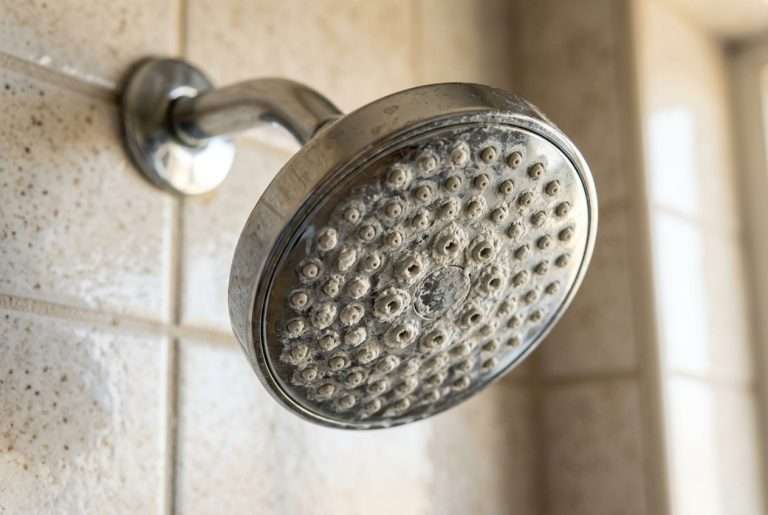
Municipal water treatment keeps water safe, but it doesn’t remove everything homeowners care about. Chlorine and chloramine are added for disinfection and often carry through to your tap, along with varying levels of hardness minerals (calcium and magnesium) depending on your area. Over time, hard water leaves scale buildup inside pipes and water heaters, and chlorine can dry out skin and hair and affect the taste of drinking and cooking water. If you’re not sure what’s in your water, a free water quality test is the easiest way to find out.
How Whole House Filtration Works
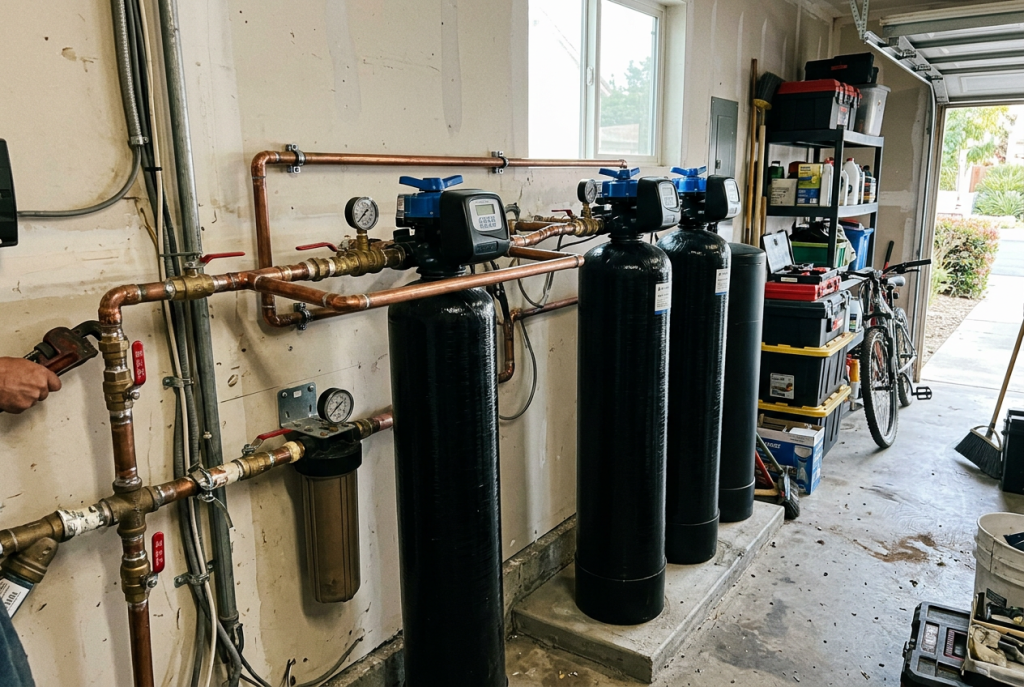
A whole house system installs at your main water line, treating every drop that enters your home — not just the water from one filtered faucet. Most multi-stage systems combine a few different treatment methods:
- Carbon filtration: Removes chlorine, chloramine, and many organic compounds that affect taste and odor.
- Sediment filtration: Catches particulate matter and reduces cloudiness.
- Water conditioning: Addresses hardness minerals to reduce scale buildup in pipes, water heaters, and appliances, without the salt and maintenance of a traditional softener.
Why It Matters for Your Plumbing
Scale buildup from hard water is one of the quieter causes of plumbing headaches — it narrows pipe diameter over time, reduces water heater efficiency, and shortens the lifespan of fixtures and appliances. Reducing scale at the source protects everything downstream, including your water heater and fixtures throughout the house.
Is It Worth It?
If you’re noticing scale buildup on fixtures, a chlorine smell or taste from your tap, or you’re buying bottled water because you don’t trust what’s coming out of the faucet, whole house filtration solves all of that in one installation rather than juggling pitcher filters and softener salt bags. It’s a bigger upfront investment than a countertop filter, but it treats every fixture in the house — showers included — and typically requires little ongoing maintenance.
Curious what’s really in your water? We offer whole house water filtration installation and a free water test to show you exactly what you’re dealing with before you decide.