
Note to readers: This post was updated on July 11, 2026 to reflect current guidance on water heater lifespan and add links to our warning-signs and tank vs. tankless comparison guides. We refreshed the details below so the advice reflects how we approach this work today.
“Should I repair my water heater or just replace it?” is one of the most common calls we get, and the honest answer depends on a few specific factors — not just the unit’s age.
How Old Is It?
Age is the first thing to check. If your water heater is only two or three years old, a repair almost always makes more sense than replacement — a single worn part failing early doesn’t mean the whole unit is done. Once a tank heater passes the 10-year mark, though, the math starts to shift. Parts get harder to source, efficiency drops, and the risk of a bigger failure (like a tank leak) goes up. Our breakdown of early signs of a failing water heater covers what to watch for before you’re stuck without hot water.
What Are the Warning Signs?
- Lukewarm water instead of consistently hot, even with the thermostat set correctly
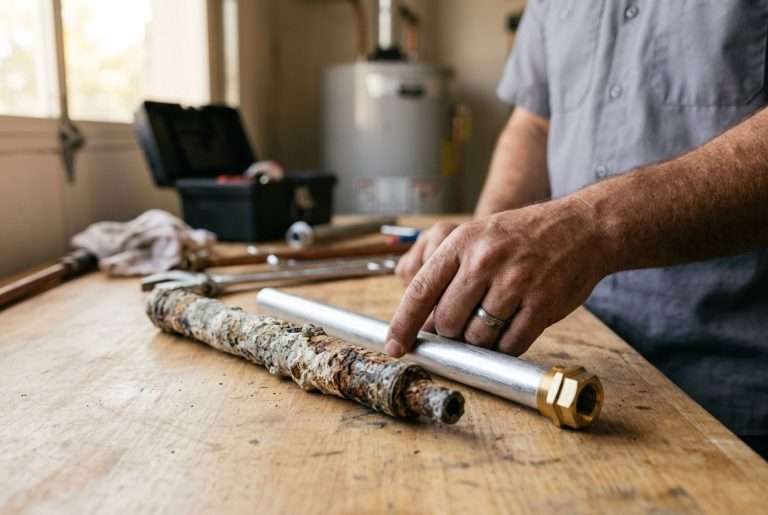
- Rusty or discolored water, which often points to internal tank corrosion
- Unusual noises — popping or rumbling usually means sediment buildup; see our guide on what those water heater noises mean
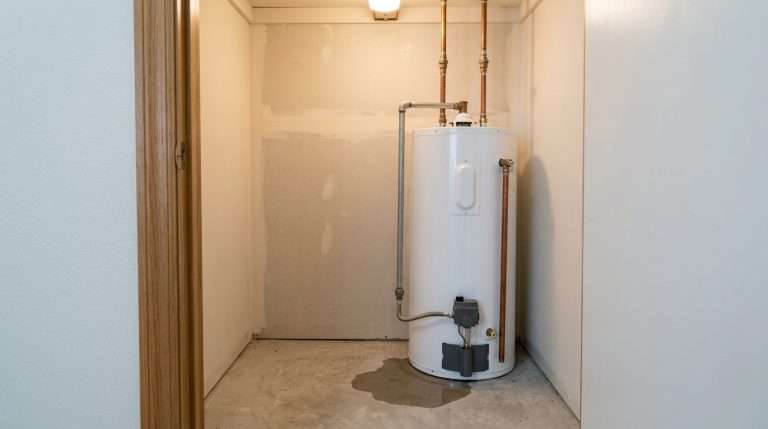
- Visible leaking around the base of the tank, which is often a sign the tank itself is failing, not just a fitting
- Rising energy bills without a clear explanation, which can mean the unit is losing efficiency
If you’re seeing a leak specifically, don’t wait — our page on why your water heater might be leaking explains which leaks are minor and which mean the tank needs to be replaced soon.
Repair Often Makes Sense When…
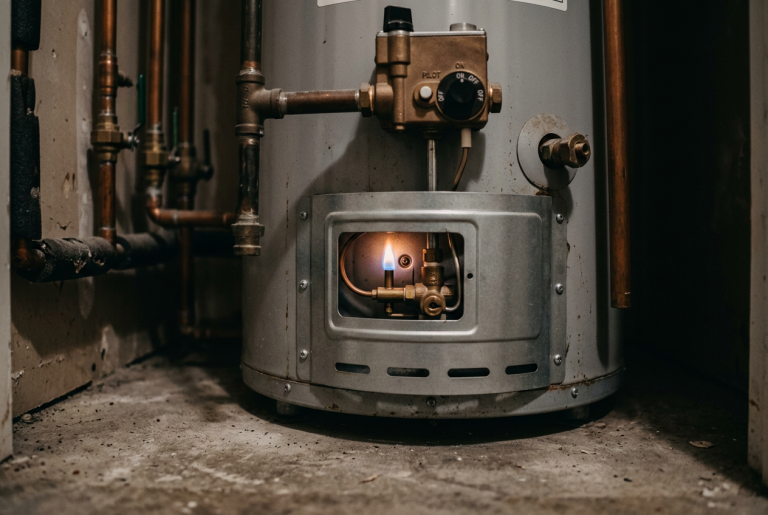
The unit is young, the problem is isolated to one part (a thermocouple, heating element, or valve), and the tank itself shows no signs of corrosion or leaking. A qualified plumber can diagnose this in one visit and give you a straight answer on cost.
Replacement Often Makes Sense When…
The unit is past 10 years old, has visible tank corrosion or a leak at the tank itself, or repair costs start approaching a meaningful fraction of a new unit’s price. This is also a good time to consider whether a tankless water heater fits your household better — our tank vs. tankless comparison for Pasadena homes walks through the tradeoffs, including upfront cost versus long-term efficiency.
A Few Other Things Worth Knowing
Gas models are often cheaper to run than electric ones over time. If you’re in a hard water area, buildup can shorten a heater’s lifespan noticeably — see why hard water destroys water heaters faster in this area for what that looks like and how to slow it down.
If you’re not sure which way to go, that’s normal — it’s a judgment call that depends on your specific unit. Give Western Rooter a call at 626.448.6455 and we’ll take a look and give you a straight answer, not just an upsell.